Stop Practicing Wrong: How Deliberate Repetition Builds the Tool Skills That Actually Hold Under Pressure
There's a version of practice that feels productive and accomplishes almost nothing. You've probably done it. You grab a tool, work with it for an hour, feel the satisfying burn in your forearms, and walk away thinking you've put in the time. You have put in time. What you haven't necessarily put in is quality repetition—the kind that actually rewires how your nervous system controls a movement.
For preppers and survival enthusiasts, this distinction isn't academic. When fatigue sets in on day four of a real scenario, when your hands are cold and your judgment is compromised, you don't fall back on your intentions or your gear list. You fall back on your deepest movement patterns. If those patterns were built on sloppy form and uncritical repetition, that's exactly what you'll get when the stakes are highest.
Let's break down how to actually build tool competence—not just tool familiarity.
Familiarity Is Not Mastery
Most people who consider themselves proficient with a splitting maul, a drawknife, or a hand plane have achieved familiarity. They've used the tool enough times to not feel awkward with it. They can produce results. But under pressure—physical exhaustion, time constraints, emotional stress—familiarity tends to collapse into its component parts, and those parts often reveal technique problems that casual use never forced them to confront.
True mastery looks different. A master craftsman can slow a movement down to one-quarter speed and maintain perfect form throughout. He can explain every joint angle and weight transfer in a swing. He can feel when something is slightly off before the tool even makes contact. And when he's exhausted, his worst repetitions still look like a competent person's best ones.
That gap between familiarity and mastery is bridged by one thing: deliberate practice. Not more practice—better practice.
What Deliberate Practice Actually Means
The concept comes from sports performance research, but it applies directly to craft skill development. Deliberate practice has a few defining characteristics that separate it from casual repetition.
It's focused on specific weaknesses, not general performance. You're not just splitting wood—you're working on keeping your lead hand loose through the last six inches of the swing. You're not just planing a board—you're eliminating the slight twist you introduce when your right shoulder drops. You identify a specific flaw, and you design your session around correcting that flaw.
It operates at the edge of your current ability. If every repetition feels comfortable and automatic, you're not building new capacity—you're reinforcing existing patterns. The productive zone is slightly uncomfortable. You should be making mistakes, catching them, and correcting them in real time.
It requires honest feedback. This is where most self-taught practitioners struggle. Without feedback, you can't tell the difference between a repetition that felt right and a repetition that was right. Video is your friend here—even a phone propped against a log gives you a reference point that your internal sense of movement simply cannot provide.
Building a Practice Structure That Actually Works
Random practice sessions don't build mastery. A periodized structure—borrowed from athletic training—does.
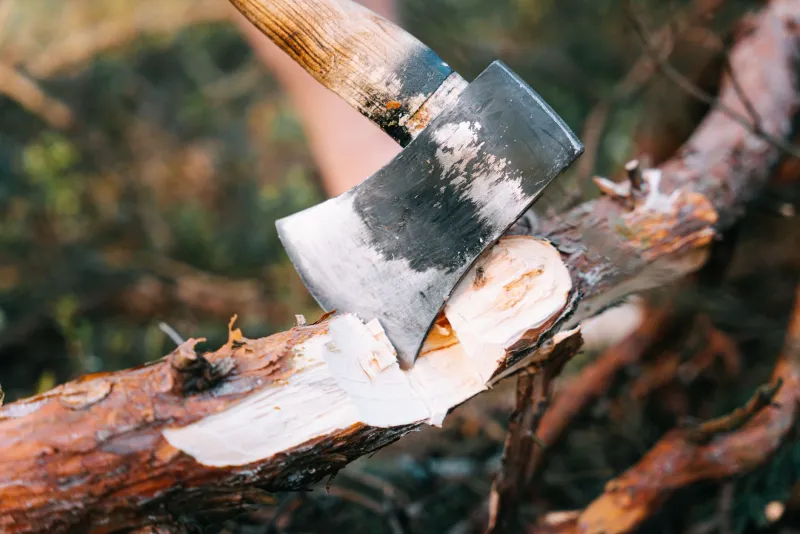
Think in three-week blocks. The first week of a block is your learning phase: slow, deliberate repetitions with full attention on a specific technique element. Work at maybe 60 percent of your normal pace. If you're learning proper axe swing mechanics, for example, you're not splitting wood yet—you're rehearsing the movement pattern in slow motion, feeling where your weight transfers, where your grip tightens and releases.
Week two is your integration phase. You bring the technique up to working speed, but you're still monitoring it consciously. You split real wood, but you're paying attention to whether the technique element you worked on in week one is holding up under load.
Week three is your stress-testing phase. You add fatigue, time pressure, or awkward conditions—working on uneven ground, splitting after a hard workout, working in cold temperatures. This is where you find out whether the technique you built actually holds when your body wants to default to its old patterns.
Then you rest for a few days, assess what broke down in week three, and build your next block around addressing that.
The Problem With Building on Bad Form
Here's something worth sitting with: muscle memory built on poor technique doesn't just limit your ceiling. It actively works against you under stress.
When your nervous system is taxed—tired, cold, scared, or operating under time pressure—it conserves resources by leaning harder on automatic movement patterns. That's efficient in theory. The problem is that if your automatic pattern includes a compensatory shoulder hitch that works fine when you're fresh but causes you to pull swings wide when you're exhausted, stress will make that hitch worse, not better.
This is why experienced craftsmen are often harder to train than complete beginners. The beginner has no ingrained patterns to fight. The experienced-but-flawed practitioner has years of reinforced compensation patterns that feel completely natural and have to be consciously overridden every single repetition before they can be replaced.
If you've been practicing casually for years, the honest move is to get a skilled observer to watch you work before you log another thousand repetitions. What they'll likely find is a handful of technique habits that have been compounding for years—habits you can't feel because they're invisible from the inside.
Setting Up Your Skill Sessions
A few practical notes on structuring your sessions:
Keep deliberate practice sessions short. Forty-five minutes of focused work beats three hours of autopilot. Cognitive fatigue degrades the feedback loop you need for deliberate practice, and once that loop degrades, you're just accumulating reps.
End every session with a handful of "performance" repetitions—full speed, full effort, no internal monitoring. This helps your nervous system integrate what you've been practicing into a fluid, automatic pattern rather than leaving it in the analytical, conscious-control mode.
Keep a simple log. Date, tool, what you worked on, what you noticed. You don't need anything elaborate. What you need is a record that lets you see patterns over time—including the pattern of which technique elements keep breaking down, which tells you where your real training deficit lies.
The Payoff Is Real
None of this is quick. Building genuine tool mastery through deliberate practice takes longer than casual use—at least in the early stages—because you're spending time on things that feel unproductive. Slowing down feels like going backward. Isolating a single technique element feels overly narrow.
But the payoff is a skill set that holds up when it counts. When your back is to the wall and your body is running on empty, you want movement patterns that were built under pressure, tested under stress, and corrected by honest feedback. That's what brings you home.
The tool in your hand is only as good as the person swinging it. Build that person deliberately.