Gear Doesn't Save You. Skill Does. Here's Where Preppers Actually Go to Learn It.
Let me say something that might sting a little.
That axe you ordered last month? The one sitting in your prep room still in the packaging? It will not save you. Not by itself. Not even close.
The prepper community has a gear problem. We've built a culture that rewards acquisition—the next knife, the next pack, the next hand-forged hatchet—while quietly ignoring the enormous gap between owning a tool and being competent with it. And competency isn't something you absorb through osmosis from YouTube videos while sitting on your couch.
Muscle memory is the real survival currency. And you can't stockpile it.
The Illusion of Preparedness
Walk through any serious prepper's setup and you'll find impressive stuff. Quality blades. Solid axes. Sharpening stones. Maybe some blacksmithing equipment. The investment is real. The intention is genuine. But ask most of those same people when they last spent a full day splitting wood by hand, or how long it took them the last time they built a fire from scratch in wet conditions, and the conversation gets quiet fast.
This isn't a knock—it's an honest observation about how human psychology works. Buying a tool feels like progress. It is progress, in a narrow sense. But there's a massive difference between having the right equipment and having the physical and cognitive reflexes to use it effectively under duress, in the dark, when you're cold and hungry and your hands are shaking.
The military figured this out a long time ago. You don't just issue soldiers weapons—you run them through thousands of repetitions until the mechanics become involuntary. Stress inoculation. Muscle memory. The ability to perform under conditions that would otherwise shut down conscious decision-making.
Survival tool competency works the same way.
What Real Competency Actually Looks Like
Tool mastery isn't a single skill—it's a layered set of capabilities that build on each other.
At the base level, you need to be able to use a tool correctly and safely under normal conditions. That sounds obvious, but most people are shakier here than they'd admit. Proper axe technique, correct draw knife grip, safe chisel work—these take real practice to internalize.
Above that, you need to be able to maintain and repair your tools in the field. A sharp tool is a safe tool and an effective tool. Knowing how to read an edge, restore a bevel, and reset a handle without a hardware store nearby is a critical capability most preppers haven't developed.
At the top of the stack is the ability to improvise—to use what's available when your primary tool fails, breaks, or gets lost. That level of adaptability only comes from deep familiarity with the underlying principles of how tools work, not just with specific tools themselves.
The gap between the first level and the third is where most preppers live. And closing that gap requires one thing: deliberate, repetitive, hands-on practice. Preferably with someone who knows more than you do watching and correcting.
Where to Actually Learn
So where do you go? Here are the paths that actually develop legitimate competency—not just familiarity.
Find a working blacksmith or bladesmith and ask to apprentice. This sounds intimidating. It's not. Most traditional craftspeople are genuinely glad to share their knowledge with someone who shows up with humility and a willingness to work. A few weekends in a real shop will teach you more about tool design, metallurgy, and edge geometry than years of reading. Look for local smiths through the American Bladesmith Society or regional craft guilds.
Connect with historical and living history societies. Organizations like the Association for Living History, Farm and Agricultural Museums (ALHFAM) run demonstrations and workshops using period-accurate tools and techniques. These aren't just history lessons—they're functional skills training delivered by people who've spent years mastering traditional crafts. Many chapters across the US actively recruit volunteers and offer hands-on participation.
Seek out regional craftspeople—coopers, wheelwrights, timber framers. These trades have never fully died out, and the people who practice them are sitting on enormous stores of practical knowledge. Timber framing guilds in particular often run workshops specifically aimed at people who want to learn hand tool joinery from scratch. The skills transfer directly to survival construction.
Take a wilderness survival course with a tool skills component. Not a weekend glamping experience—a real course that puts you in the field with hand tools and expects you to produce results. Tom Brown Jr.'s Tracker School in New Jersey, the Wilderness Awareness School in Washington State, and similar programs across the country offer multi-day immersive training that builds real competency under realistic conditions.
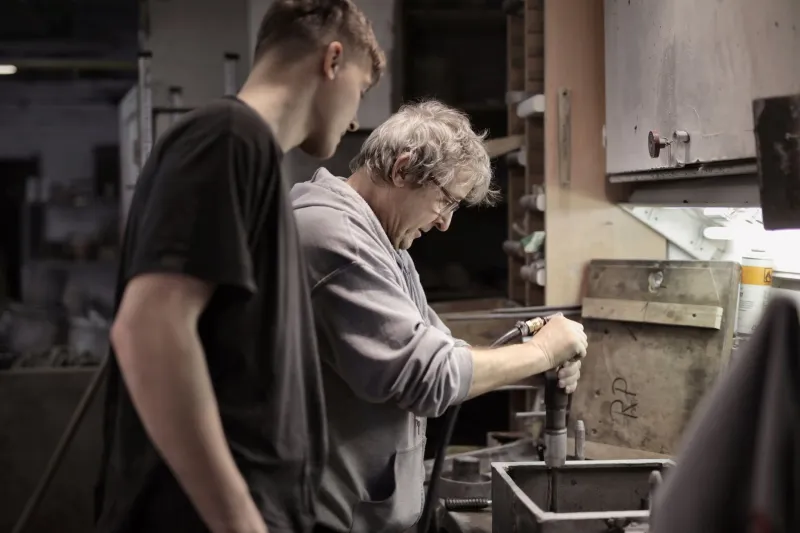
Find a mentor, not just a teacher. The difference matters. A mentor watches how you work, corrects your mechanics in real time, and pushes you past the point where you'd quit on your own. This relationship is how traditional skills were transmitted for centuries, and it's still the most effective method available.
Build a Practice Habit Before You Build Your Stockpile
Here's a practical reframe for how to think about your preparedness budget and schedule.
Before you buy another piece of gear, ask yourself: have I actually practiced with what I already own until it feels natural? Can I sharpen every blade in my kit freehand? Have I built a fire with my striker in the rain? Have I processed a full cord of wood by hand?
If the answer is no, put the next gear purchase on hold and invest that time and money into skill development instead. A single weekend workshop with a working craftsman will do more for your actual survival capability than most equipment purchases you'll ever make.
The old-timers didn't have prep rooms full of backup gear. They had hands that knew what to do. That knowledge lived in their muscles, not on a shelf.
That's the standard worth chasing.