The Last Smiths: Finding the Craftspeople Who Still Know What America Forgot
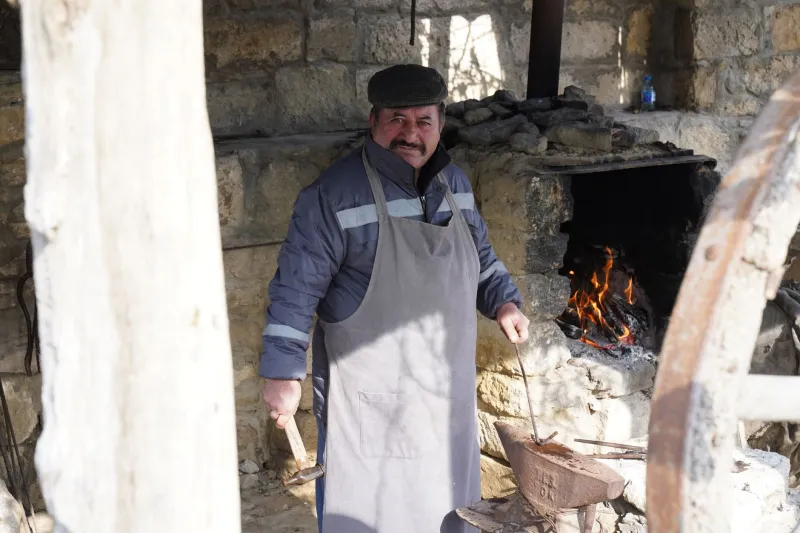
In 1900, the United States had an estimated 100,000 working blacksmiths. By 1960, the number had collapsed to somewhere around 10,000. Today, estimates vary wildly depending on how you count—but the working smiths who can forge, temper, and shape functional tools from raw stock, and who do so as a primary livelihood, number in the low thousands at best.
That's not a niche hobby statistic. That's the near-total erasure of a knowledge tradition that built American infrastructure, fed American farms, and equipped American homesteads for more than two centuries.
For preppers and survival-minded folks, this matters in a specific and practical way. The ability to repair, modify, and ultimately fabricate metal tools from available materials is one of the most foundational survival skills a community can hold. And right now, most American communities don't hold it. The question is whether you can find what's left—and whether you're willing to do something about it.
How It Happened
The decline of rural blacksmithing wasn't a sudden event. It was a long, compounding process driven by forces that seemed like pure progress at the time.
Mass manufacturing made factory-produced tools cheap enough that repair often cost more than replacement. Rural electrification in the 1930s and 1940s opened up electric welding as an alternative to forge work for basic metal joining. The post-war economic boom pulled rural populations toward urban centers. And the consolidation of American agriculture—fewer, larger farms operated with increasingly specialized machinery—eliminated the dense network of small farms that had kept rural blacksmiths economically viable.
By the time anyone thought to document what was being lost, most of the practitioners were elderly, and most of their apprentices had found other trades.
Jim Hargrove, a third-generation smith in rural Tennessee who learned the trade from his grandfather in the 1970s, put it plainly in a conversation we had for this piece: "My grandfather taught me because he was afraid nobody else would. He was right to be afraid. By the time I was learning, I was the only young person in three counties who gave a damn. That was fifty years ago."
Hargrove still operates a small forge out of a shop on his property. He makes custom agricultural tools, does repair work for a handful of local farms, and teaches occasional workshops. He's in his late sixties and has no formal apprentice.
What Was Lost With the Smiths
The loss isn't just about the ability to hit hot metal with a hammer. Working blacksmiths carried embedded knowledge that doesn't exist in any book—knowledge about regional material properties, about how specific steel stock from specific sources behaved under specific conditions, about how to read a fire and a piece of steel simultaneously and make adjustments in real time.
They also carried repair knowledge that was deeply practical and locally calibrated. A rural smith in 1920 knew every piece of equipment on every farm within ten miles of his shop. He knew which tools took heavy abuse and needed thicker stock. He knew which farmer's son was rough on handles and would be back in six weeks. He could look at a broken piece and tell you how it failed and how to make the replacement stronger.
That kind of contextual, accumulated, place-specific knowledge doesn't survive in YouTube tutorials. It survives in people—and right now, a lot of those people are in their seventies and eighties.
Where the Knowledge Still Lives
The good news is that it isn't gone. It's just scattered and harder to find than it used to be.
Agricultural and rural counties in the South, Appalachia, and the upper Midwest still have working smiths—often older men who kept the trade alive out of personal conviction rather than economic necessity. County fairs, farm auctions, and agricultural extension offices are underrated resources for finding them. The extension office in a rural county often knows every skilled tradesperson in the area.
Living history sites and historical museums employ working blacksmiths as demonstrators and craftspeople. Colonial Williamsburg in Virginia, Conner Prairie in Indiana, and dozens of smaller living history operations across the country maintain active forges with skilled practitioners. Many of these smiths are genuinely expert and are often willing to talk beyond the demonstration script if you approach them seriously.
The Artist Blacksmith's Association of North America (ABANA) and its regional chapters are the best organized network for finding active smiths. Their chapter directory is searchable by state and often includes members who teach. The quality varies, but the network is real and active.
Farrier schools and agricultural colleges that still offer blacksmithing programs are another avenue. Farriery—the craft of shoeing horses—kept a significant portion of practical forge skill alive through the twentieth century when decorative and architectural smithing declined. A skilled farrier knows more about working steel under field conditions than most hobbyist smiths.
How to Actually Apprentice
Finding a smith is the first step. Getting them to teach you is the second, and it requires a different approach than signing up for a class.
Most working smiths who are open to teaching aren't running formal programs. They're busy people who might be willing to let someone work alongside them if that person demonstrates genuine commitment and doesn't waste their time. Show up with a willingness to do the unglamorous work—moving stock, maintaining the fire, cleaning up—before you ask to hold a hammer. Bring value before you ask for knowledge.
Sarah Okonkwo, a smith based in western North Carolina who learned the trade through a combination of formal courses and informal apprenticeship with an older practitioner, described her experience this way: "The old guy I learned from didn't want a student. He wanted help. I spent three months doing grunt work before he started actually explaining what he was doing. By then I'd already learned more from watching than most people get from a weekend class."
Okonkwo now teaches weekend intensives focused on basic tool repair and modification—exactly the skills most relevant to preppers and homesteaders. She's one of a small but growing number of younger smiths who are specifically focused on practical, functional work rather than decorative ironwork.
What You Should Learn First
If you're approaching blacksmithing from a survival and preparedness angle, the foundational skills worth prioritizing are tool repair, edge dressing, and basic stock manipulation—not ornamental work.
Being able to re-temper a blade that's been overheated, reshape a damaged tool edge, or fabricate a simple replacement part from available stock is enormously more valuable in a practical scenario than being able to forge a decorative hook. Start there. The more artistic skills can come later if you want them.
A basic home forge setup—a propane forge, a small anvil, and a few essential hammers and tongs—can be assembled for a few hundred dollars if you're patient about sourcing used equipment. That's a reasonable entry point for someone who wants to develop the skill before committing to a full shop.
The Urgency Is Real
This isn't a problem that gets easier with time. Every year that passes without the knowledge being transferred is a year it gets harder to find. The smiths who learned the trade in the 1950s and 1960s are aging out. The window to learn from them directly is closing.
If you're serious about preparedness—about building a skill set and a community that can function without supply chains and just-in-time delivery—the ability to work metal is foundational. Not because every prepper needs to be a smith, but because every prepared community needs someone who can be.
Go find your local smith. Bring something that needs fixing. Ask questions. Then ask if you can come back and help. That's how this knowledge has always been passed on—person to person, fire to fire, one generation deciding the next one deserves to know.