Cured by Fire and Time: Building a Primitive Smokehouse That Preserves Meat the Old-Fashioned Way
There's something deeply satisfying about pulling a side of venison out of a smokehouse you built yourself, knowing it'll keep for weeks without a single kilowatt of electricity. Our grandparents' grandparents did it. Frontier families did it. And if the grid ever goes dark for longer than a long weekend, the ability to preserve protein through smoke and salt could be one of the most valuable skills you own.
Building a functional smokehouse from primitive or low-tech materials isn't complicated—but it does require understanding a few core principles. Get those right, and your smokehouse will work beautifully. Skip them, and you'll end up with spoiled meat and a hard lesson learned the expensive way.
Let's break it down.
Why a Smokehouse Beats Every Other Off-Grid Preservation Method
Smoking meat does a few things at once. The heat drives out moisture that bacteria need to thrive. The smoke itself deposits antimicrobial compounds—phenols, aldehydes, and organic acids—directly onto the surface of the meat. Combined with a dry-salt or brine cure applied beforehand, you're stacking multiple layers of preservation that have proven reliable across centuries of use.
Compared to drying alone, smoking adds flavor and an extra layer of protection. Compared to fermentation or canning, it requires almost no specialized equipment. For preppers focused on self-sufficient food infrastructure, a smokehouse is one of the highest-return projects you can tackle.
Know Your Designs Before You Break Ground
Not every smokehouse looks the same, and the right choice depends on your land, your materials, and what you're preserving.
Pit-Style Smokehouses
This is about as primitive as it gets. You dig a pit for the fire, run a trench covered with bark or flat stones to act as a flue, and build a simple enclosure at the far end where the meat hangs. The trench creates distance between the flame and the food, which is critical—you want smoke, not direct heat. Pit designs work especially well for fish and thin cuts that cold-smoke well. They're also fast to construct if you're in a temporary camp situation.
Above-Ground Log Cabin Style
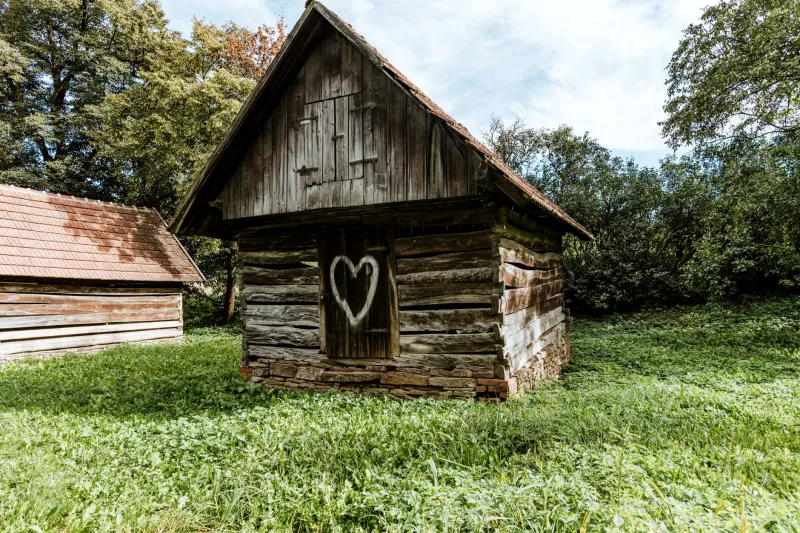
This is the classic American farmstead smokehouse. You're essentially building a small, tight log cabin—notched corners, minimal gaps—with a small firebox either inside at ground level or just outside connected by a short flue. The tight construction traps smoke efficiently. This style handles large batches of hams, whole birds, and game roasts exceptionally well. If you're building something meant to last decades, this is your design.
Frame and Bark or Plank Construction
If you don't have the time or timber for full log construction, a simple post-and-frame structure covered in bark slabs, rough-sawn boards, or even doubled-up burlap works fine for warm smoking. The goal is a reasonably airtight enclosure that holds smoke. Gaps can be chinked with clay or mud. It's not pretty, but it works.
Wood Selection: This Is Where Flavor Lives
The wood you burn determines the flavor profile of everything you smoke. This matters more than most beginners expect.
- Hickory is the American standard for pork and game. Heavy, bold smoke. The wood of choice across Appalachia for generations.
- Apple and cherry burn cleaner and sweeter. Excellent for poultry and fish. More forgiving for beginners.
- Oak is your workhorse. Medium smoke, neutral enough to work with almost anything, widely available across most of the US.
- Mesquite burns hot and intense. Use it sparingly or mixed with oak—it can overwhelm lean cuts if you're not careful.
- Avoid softwoods entirely. Pine, cedar, and spruce contain resins that produce acrid, toxic smoke. This isn't a preference—it's a health issue.
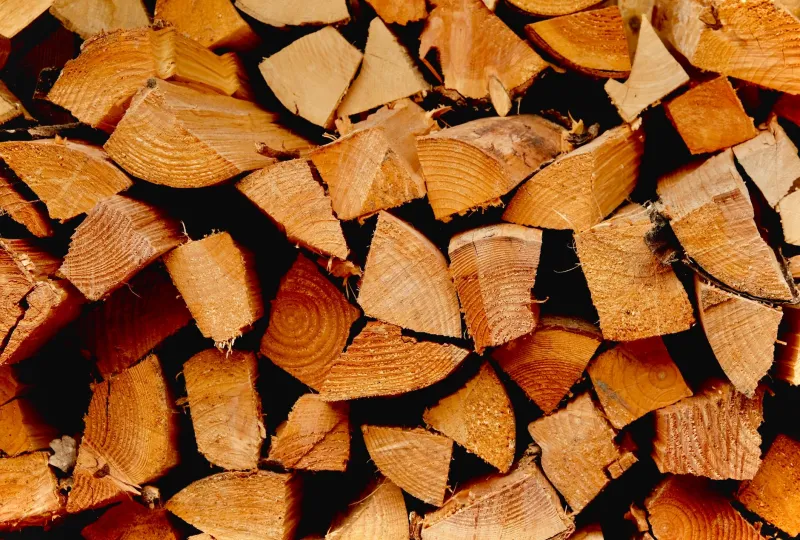
Always use dry, seasoned hardwood. Green wood produces too much steam and bitter creosote. If your wood hisses and spits, it's not ready.
Managing Temperature Without a Thermostat
This is where most first-timers struggle. Modern smokers have digital controllers. Primitive smokehouses have your hand, your eyes, and your experience.
For cold smoking (under 100°F), you want the fire small, the flue long, and the smoke chamber well away from direct heat. Cold smoking doesn't cook the meat—it cures it. This method requires that your meat be fully salt-cured beforehand, or you're risking serious foodborne illness. Cold-smoked meats like country hams and dried fish can last months when done correctly.
For warm smoking (100–160°F), you want a more active fire and a shorter flue distance. This is the zone for most game meats, poultry, and sausages you plan to eat within days to a couple of weeks.
To gauge temperature without a thermometer, hold your hand near the hanging meat—not the fire. If you can hold it there comfortably for several seconds, you're in cold-smoke territory. If it's uncomfortable within two seconds, you're running warm. It's a rough gauge, but experienced smokers have used it for generations.
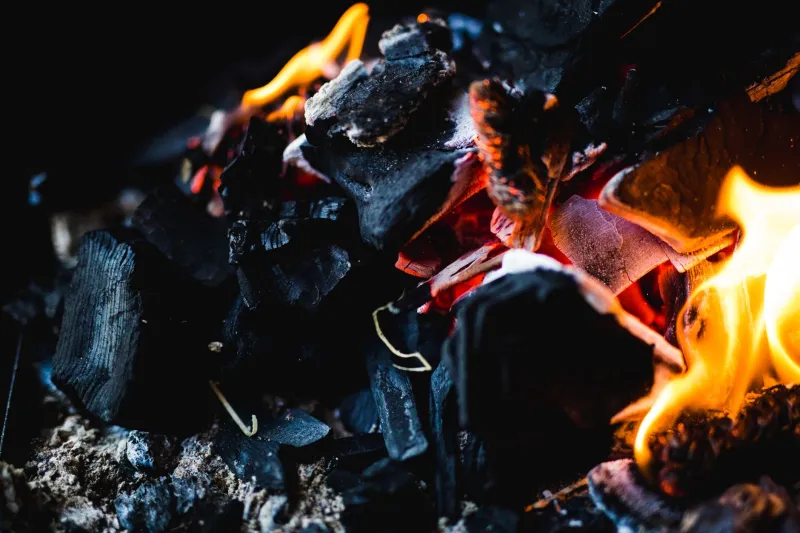
Keep your fire small and consistent rather than large and variable. A steady trickle of smoke is more effective than a roaring blaze that scorches the outside while leaving the interior under-processed.
Troubleshooting the Mistakes That Ruin a Batch
Meat that spoils despite smoking: Almost always a curing failure, not a smoking failure. If you didn't salt long enough or use enough salt, smoke can't compensate. Follow traditional cure ratios—roughly one pound of non-iodized salt per five pounds of meat for a dry cure—and don't rush the process.
Bitter, acrid flavor: You're either using green wood, softwood, or running too much smoke with too little airflow. Smoke needs oxygen to burn clean. Make sure your smokehouse has a small vent at the top to allow airflow without losing too much heat.
Uneven smoking: Meat hung too close to the fire or in the direct path of the flue will over-smoke on one side. Rotate your cuts every few hours and stagger your hanging racks so nothing is directly above the heat source.
Excessive moisture inside the chamber: This creates steam instead of smoke and can actually encourage bacterial growth. Leave a small gap at the top for moisture to escape, and pat your meat dry before hanging—a dry surface accepts smoke far better than a wet one.
The Infrastructure Mindset
Here's the thing about a smokehouse: it's not just a project, it's infrastructure. Once it's built, you have a system. You can process a deer in the fall, smoke a batch of fish in the spring, and preserve game birds whenever the opportunity comes. You're not dependent on a freezer that needs power, a grocery store that needs supply chains, or any technology that can fail.
That kind of self-sufficiency is exactly what this site is about. Primitive tools, proven techniques, and the confidence that comes from knowing you can feed yourself and your family when the modern world gets complicated.
Start small if you need to. A simple pit smokehouse costs almost nothing to build and will teach you more about the process than any YouTube video. Once you've run a few batches and understand how smoke and heat behave in an enclosed space, you can scale up to a permanent structure built to last.
Salt, smoke, and patience. That's the formula. It worked for a few hundred years before refrigerators showed up, and it'll work long after they're gone.