Wild Fibers That Work: Harvesting Nettle, Milkweed, and Dogbane for Cordage That Actually Holds
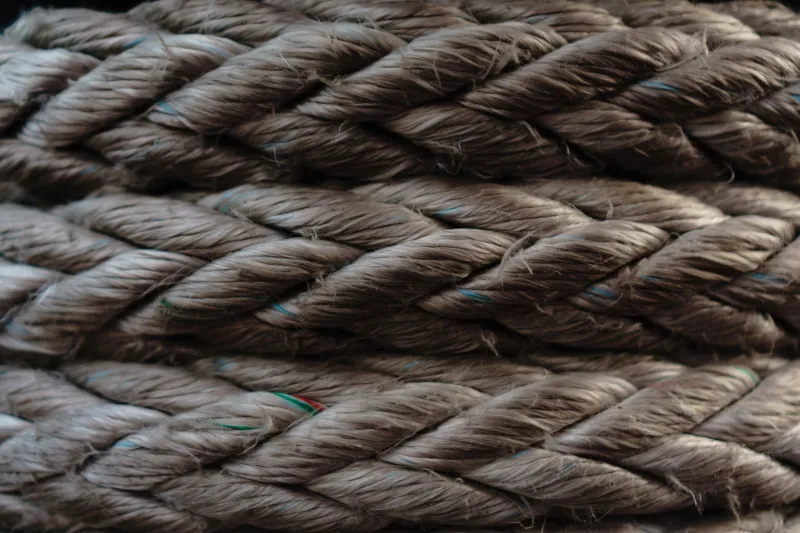
Walk through almost any overgrown field, creek bank, or woodland edge in the lower 48 and you're surrounded by rope. Not the kind hanging in neat coils at the hardware store—the kind that grows six feet tall, goes dormant in winter, and has been quietly producing some of the strongest natural fiber on the continent for thousands of years. Most people walk right past it.
Nettle, milkweed, and dogbane. Three plants. Three distinct processing methods. And in real-world field tests, they produce cordage that holds up under serious load—sometimes better than the cheap nylon stuff you grabbed at a discount bin. That's not hype. That's botany meeting necessity.
If you're serious about primitive skills, this is one of the most practical things you can learn. It costs nothing, works everywhere across North America, and once you understand what you're looking for, you'll never look at a weedy field the same way again.
Why Plant-Based Cordage Still Matters
Look, nobody's saying ditch your 550 paracord. That stuff is great. But here's the real question: what happens when you're three days into the backcountry, your gear is compromised, and you need rope? Or what happens when supply chains get weird and the prep you thought you had isn't there anymore?
Natural cordage fills that gap. It's a skill that converts the landscape around you into a resource. And unlike a lot of primitive techniques that require specialized tools or materials, plant fiber cordage can be made with nothing but your hands and a little patience. That's a hard combination to beat.
Native peoples across North America figured this out a long time ago. Archaeological evidence shows plant fiber cordage in use for at least 10,000 years on this continent. They weren't doing it because it was charming—they were doing it because it worked.
Stinging Nettle: The Underestimated Workhorse
Stinging nettle (Urtica dioica) is probably the most widely distributed fiber plant in North America. It grows from the Pacific Northwest to the Appalachians, loves disturbed soil and stream banks, and produces some of the finest natural fiber you can harvest by hand.
Harvest in late summer to early fall, after the stalks have matured but before they fully dry out. Grab the stalk from the bottom—yes, you'll get stung unless you wear gloves, but the sting disappears once the plant is processed. Split the stalk lengthwise and peel away the outer green layer. Inside you'll find long, cream-colored fiber bundles running the length of the stem.
Ret the stalks if you have time—bundle them loosely and let them sit in shallow water or damp ground for a few days. This breaks down the plant material holding the fibers together and makes separation much easier. If you're in a hurry, dry the stalks and then break them between your fingers, working the woody core away from the fiber in small sections.
Nettle fiber is fine, flexible, and strong. It twists into cordage that holds knots well and doesn't stiffen excessively when wet. For lashing, binding, and small-load applications, it's hard to beat.
Common Milkweed: Coarser, But Surprisingly Capable
Common milkweed (Asclepias syriaca) grows across the eastern two-thirds of the country and is instantly recognizable by its broad leaves and those distinctive seed pods that burst open in fall. The fiber quality is coarser than nettle, but it's also more immediately available and easier to process without retting.
Harvest the stalks after the first frost, when they've dried naturally on the plant. The drying process does a lot of the work for you—the pithy core becomes brittle and separates easily from the outer fiber. Break sections of dried stalk between your fingers and work the woody material free, pulling the long fibers loose in strips.
Milkweed fiber is bulkier than nettle and twists into cordage that's better suited for medium-load applications—think shelter lashing, bow strings, or carrying straps rather than fine thread. It's a little more forgiving to work with for beginners because the individual fibers are easier to handle. The finished cordage has a slightly rough texture that actually helps it grip in knots.
One thing to keep in mind: milkweed fiber degrades faster when exposed to prolonged moisture compared to dogbane or nettle. It's a dry-weather performer, so account for that in how you use it.
Dogbane: The One the Old-Timers Preferred
If nettle is the workhorse and milkweed is the beginner-friendly option, dogbane (Apocynum cannabinum) is the thoroughbred. Also called Indian hemp—which tells you something about its historical reputation—dogbane produces fiber that many primitive skills practitioners consider the best of any North American wild plant.
It grows in colonies along roadsides, field edges, and riverbanks across most of the continental US. The stalks are slender and reddish-brown, and they produce a distinctive rustling sound in the wind. Harvest in fall or winter after the stalks have dried. The processing is similar to milkweed—break sections of stalk and work the fiber free from the woody core—but dogbane fiber is finer, longer, and noticeably stronger.
Twisted dogbane cordage has a smoothness and consistency that's genuinely impressive for something made with bare hands. Historical accounts and modern testing both confirm it holds tension well, resists fraying, and takes to reverse-wrap twisting techniques cleanly. If you're making a bowstring, a fishing line, or anything where failure is not an option, dogbane is your plant.
The Reverse-Wrap Twist: One Technique to Rule Them All
Regardless of which plant you're working with, the reverse-wrap is the fundamental technique for turning loose fiber into usable cordage. It's simple in concept but takes a little practice to get consistent.
Split your fiber bundle roughly in half. Hold the midpoint between your thumb and forefinger. Twist the top bundle away from you while simultaneously wrapping it over the bottom bundle toward you. Then switch—the bottom becomes the top, and you repeat. The opposing twists lock the fibers together and create a self-tightening structure that gets stronger under tension.
Add new fiber by overlapping it with the end of an existing bundle and continuing to twist. With practice, you can produce cordage at a surprisingly fast rate—experienced practitioners can make several feet of functional rope in under an hour.
How Does It Actually Hold Up?
Here's the honest answer: it depends on the plant, the processing, and the application. Well-processed dogbane cordage has been tested at breaking strengths exceeding 50 pounds for a single-ply strand. Nettle runs close behind. Milkweed is softer but still functional for most camp applications.
None of these match high-quality nylon or polyester rope for raw tensile strength. But that's not really the point. The point is that these plants are free, available across most of the country, and can be turned into working rope with zero tools. In a grid-down situation or a deep-backcountry emergency, that's a capability worth having.
Start practicing now, while the stakes are low. Learn to identify these plants in your region. Harvest a few stalks this fall and spend an afternoon processing them. Make a few feet of cordage and actually use it—tie some knots, hang some weight, see what it can do.
The plants are out there. The knowledge is yours to claim. All it takes is a little time and the willingness to get your hands dirty—possibly a little stung.