Black Gold from Your Backyard: How to Make Charcoal and Why It Changes Everything
Most people think of charcoal as something you grab off a shelf at the hardware store before a summer cookout. Bag of Kingsford, lighter fluid, done. But strip away the convenience store packaging and what you've actually got is one of the most powerful and versatile materials in human history — a substance that helped forge civilizations, fuel warfare, filter drinking water, and preserve food long before refrigerators or pharmacy shelves existed.
For preppers and primitive skills enthusiasts, learning to produce your own charcoal from scratch isn't just a cool party trick. It's a genuine force multiplier. Once you understand how it's made and what it unlocks, you'll wonder how this skill ever fell off the radar.
What Charcoal Actually Is (And Why It Matters)
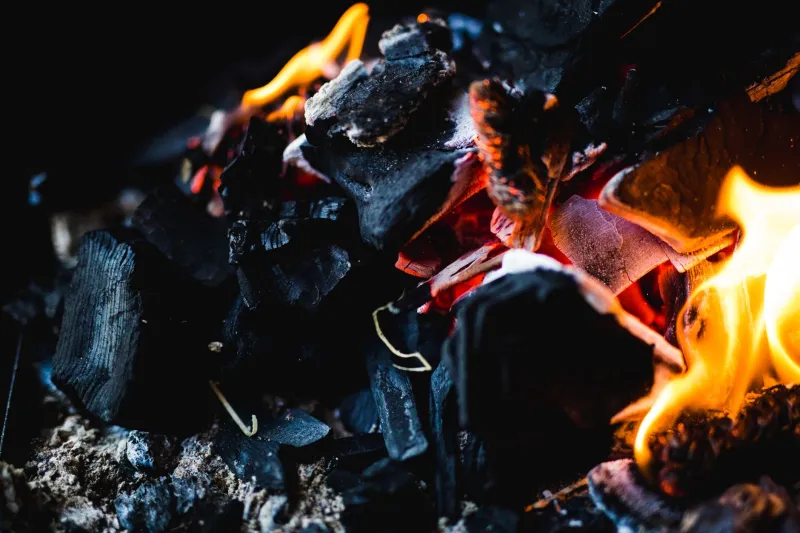
Charcoal is wood that's been cooked in a low-oxygen environment until all the moisture, sap, and volatile gases are driven off, leaving behind nearly pure carbon. That's it. Simple chemistry, ancient process. The result is a lightweight, porous material that burns hotter and cleaner than raw wood — and does a whole lot more besides.
The reason charcoal has been so valuable across cultures and centuries comes down to that porous structure. Under a microscope, a single piece of charcoal looks like a sponge city — millions of tiny chambers and channels that can trap impurities, hold heat, and feed chemical reactions in ways raw wood simply can't match.
That's why it shows up in so many different survival contexts. It's not a coincidence. It's chemistry.
The Old-School Methods: Pit Firing and the Mound Kiln
Before anyone built a fancy retort or bought a steel drum, people made charcoal two ways: in pits dug into the earth, or in carefully constructed mounds covered with soil and leaves. Both methods rely on the same principle — burn wood hot enough to drive off everything except carbon, but starve the fire of enough oxygen to prevent the wood from burning completely to ash.
The Pit Method is about as straightforward as it gets. Dig a pit roughly two to three feet deep and however wide you need based on your wood volume. Fill it with dry hardwood — oak, hickory, and maple are your best bets in most parts of the US. Light it from the top and let it get going strong, then gradually cover the pit with a layer of dirt and green leaves to choke the oxygen supply. You're not smothering the fire entirely — you're throttling it. The wood will continue to pyrolyze (that's the technical term for cooking without full combustion) over the next several hours. After it cools completely — and that can take a full day — you dig it out and find charcoal.
The Mound Method, sometimes called a charcoal clamp, was the dominant technique for professional charcoal burners (called colliers) throughout American history right up through the 19th century. You stack your wood in a tight dome shape around a central chimney pole, pack the whole thing with wet leaves, grass, and dirt, then light it from the center chimney and manage the burn over the course of several days by opening and closing small air vents around the base. It takes more skill and attention, but it scales up dramatically — a large mound can process hundreds of pounds of wood at once.
The Modern Backyard Version: The Steel Drum Retort
If you want consistent results with less babysitting, a simple two-drum retort is the way to go. You don't need to be a metalworker to build one, though those skills certainly help — check out our piece on basic metalworking if you want to go deeper on that front.
The basic setup: one large steel drum holds your wood load. A smaller fire burns outside or underneath it. The gases driven off the wood during pyrolysis are vented back into the outer fire, which both fuels the process and prevents those gases from polluting the air. It's cleaner, more efficient, and produces a more uniform charcoal than open-pit methods.
For the homesteader or serious prepper with a little yard space, a retort setup is worth the one-time build investment. You'll be producing quality charcoal consistently, and you'll have a setup that scales with your needs.
What You Can Do With It: The Real Reason to Learn This Skill
Here's where things get interesting. Charcoal isn't just fuel. It's a platform.
Water Filtration. Activated charcoal is the gold standard for removing chemical contaminants, heavy metals, and organic compounds from water. You can't make pharmaceutical-grade activated charcoal in your backyard, but you can make a functional biochar filter that dramatically improves water quality when combined with sand and gravel layers. In a grid-down scenario, that matters enormously.
Metallurgy. If you've ever wondered how blacksmiths and early metalworkers achieved the temperatures needed to work iron and steel, charcoal is a big part of the answer. It burns hotter and produces less sulfur than raw wood, which is critical when you're trying to shape metal rather than contaminate it. Our article on basic metalworking gets into this more, but understand that serious smithing and charcoal production are deeply linked skills.
Gunpowder. Charcoal is one of the three core ingredients in traditional black powder, alongside sulfur and potassium nitrate. The quality and particle size of your charcoal directly affects the burn characteristics of the powder. This isn't a rabbit hole we'll go all the way down here, but if you've read our piece on black powder history, you already know how foundational this connection is.
Food Preservation and Soil Amendment. Biochar — a specific type of charcoal produced at lower temperatures — has been used for centuries to preserve root vegetables in storage and to dramatically improve soil fertility. Burying biochar in garden soil creates long-term nutrient retention that can boost yields for years. Some traditional cultures packed eggs and root vegetables directly in charcoal powder to extend shelf life without refrigeration.
Trade Value. In any serious disruption scenario, charcoal becomes a commodity. People will need it for cooking, water treatment, and basic medicine (activated charcoal is a legitimate emergency treatment for certain types of poisoning). If you've got a reliable production method, you've got something worth trading.
Wood Selection: Not All Charcoal Is Equal
Hardwoods produce denser, longer-burning charcoal. Softwoods burn faster and produce lighter char. For metallurgy and gunpowder applications, hardwood charcoal is strongly preferred. For filtration and soil amendment, the species matters less than the production temperature and process.
In the eastern US, oak and hickory are your go-to choices. Out west, mesquite produces exceptional charcoal. Avoid wood that's been treated, painted, or pressure-treated — you don't want those chemicals in your charcoal, period.
Start Small, Scale Up
If you've never made charcoal before, don't start with a 55-gallon drum retort. Start with a small pit, a modest load of dry hardwood, and a willingness to fail a couple of times before you nail the process. Charcoal making is a skill with a learning curve, and the variables — wood moisture, pit depth, soil type, burn duration — all interact in ways you'll only understand through hands-on experience.
Once you've got the basics down, scaling up is straightforward. And once you've got reliable charcoal production dialed in, you'll find yourself revisiting almost every other primitive skill you've been developing with fresh eyes. That's the thing about foundational skills — they have a way of making everything else work better.
Get your hands dirty. Build the pit. Make the char. This one's worth every minute you put into it.