One Axe, One Life: Why the Tool You Know Beats the Gear You Own
Somewhere in America right now, there's a guy standing in his garage surrounded by more survival gear than a small fire station. Folding saws, hatchets, kukris, multi-tools, dedicated kindling splitters, and at least one thing still in the box he bought off a late-night YouTube rabbit hole. He's got options. What he doesn't have is mastery.
That's the paradox nobody in the gear world wants to talk about. More tools can actually make you less prepared — not because the tools are bad, but because spreading your attention across a dozen implements means you never develop genuine intimacy with any one of them. And in a real survival situation, intimacy is what keeps you alive.
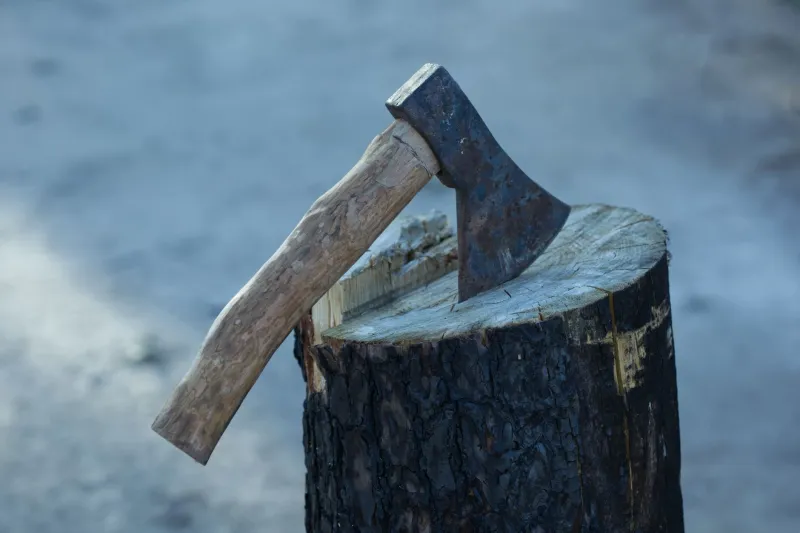
Let's talk about the axe. Specifically, let's talk about why one good one — handled well, maintained obsessively, and understood deeply — is worth more than a cabinet full of shiny alternatives.
The Accumulation Trap
Gear culture has a gravitational pull. New products, clever designs, and the promise of a purpose-built solution for every conceivable scenario make it easy to spend money and feel prepared without actually becoming more capable. There's nothing wrong with quality gear. The problem is when acquisition replaces practice.
Backcountry guide and woodsman Marcus Holt, who leads extended wilderness immersion courses in the Appalachians, puts it plainly: "I've taken clients into the backcountry who owned $3,000 worth of kit and couldn't split a piece of firewood cleanly to save their life. Then I've worked with guys who showed up with a beat-up Hudson Bay axe they'd owned for fifteen years and could do things with that tool that looked almost like magic. The difference wasn't the gear. It was the relationship."
That word — relationship — keeps coming up when you talk to people who live and work in the outdoors professionally. It's not the language you expect from rugged survivalists, but it's accurate. The tools you know intimately behave predictably under pressure. The ones you've only used a few times are liabilities.
What an Axe Actually Teaches You
Choose an axe as your primary learning tool and it starts teaching you things almost immediately — and not just how to chop wood.
It teaches geometry. The angle of your swing, the position of your feet, the arc of the bit through a piece of timber — these are spatial relationships your body learns through repetition. That physical intelligence transfers. Woodworking, shelter construction, tool repair — all of it benefits from the proprioceptive awareness you build swinging an axe.
It teaches material science. Different wood species behave differently under a blade. Green wood versus seasoned wood. Straight grain versus twisted. You learn to read a log before you touch it, to adjust your approach based on what you're seeing. That kind of observational skill is foundational to wilderness competence in a way that no gear purchase can replicate.
It teaches maintenance. An axe that isn't cared for becomes a dangerous, ineffective liability. Learning to file and strop a proper edge, to recognize when the handle needs replacing, to treat the wood against cracking — these habits of attention translate directly to every other tool in your kit.
And perhaps most importantly, it teaches humility. An axe will punish sloppy technique. Glancing blows, poor body mechanics, and inattention leave marks — on your wood, on your handle, and occasionally on your confidence. That honest feedback loop is exactly what builds real skill.
Choosing the One That Earns Its Place
If you're going to go deep with a single axe, the choice matters. Not because any one design is definitively superior, but because you want something versatile enough to grow with your skills and durable enough to last decades.
For most American preppers and backcountry users, a mid-weight single-bit axe in the 2 to 2.5 pound head range hits the sweet spot. Light enough to carry without complaint, heavy enough to do serious work. Classic American patterns — the Jersey, the Michigan, the Boys axe — have earned their reputations through generations of hard use. They're not trendy. They're proven.
Handle length matters more than most people realize. A 28 to 32 inch American hickory handle gives you the leverage for felling and splitting while remaining manageable for detail work like notching and limbing. Hickory specifically has a shock-absorbing quality that synthetic handles can't fully replicate, and it can be repaired in the field if you know what you're doing.
Skip the gimmicks. Composite handles, tactical coatings, and multi-function hybrid designs are solutions looking for problems. What you want is a tool that's been around long enough to prove itself — and the designs that have survived a century of hard American use did so for good reason.
The Maintenance Ritual
Here's where most people fall short. They buy a decent axe, use it a few times, and let it sit. The edge dulls, the handle dries out, and eventually the tool becomes something they avoid rather than reach for.
Maintaining an axe is simple, but it requires consistency. After every serious use session, wipe the head down, inspect the edge for rolled or chipped sections, and give the handle a look for cracks near the eye. A light coat of boiled linseed oil on the handle every few months keeps the wood conditioned and tight.
Sharpening is a skill unto itself, and it's worth developing properly. A mill bastard file for removing material, followed by a whetstone for refining the edge, followed by a leather strop loaded with honing compound — that three-step process will keep your axe sharper than it was when you bought it. Learn the correct bevel angle for your specific head geometry and maintain it religiously.
When you file and strop your axe regularly, you're not just maintaining a tool. You're staying in contact with it. You're noticing things — subtle changes in the edge geometry, small dings that tell a story, the way the handle fits your grip after years of use. That ongoing attention is part of what builds genuine mastery.
One Tool, Deep Knowledge
There's an old idea in traditional craftsmanship that a journeyman has many tools, but a master needs few. The master's tools are extensions of his hands because he has spent so much time with them that the boundary between tool and user has blurred.
That's the goal. Not to deprive yourself of useful gear, but to build at least one relationship with one tool deep enough that you could navigate a serious wilderness situation with confidence, even if everything else was stripped away.
Your axe can fell a tree, process firewood, notch logs for shelter, split kindling, drive stakes, prepare game, and in a pinch defend your camp. It can do all of that — but only if you've put in the hours to make it an extension of your arm rather than a stranger in your hand.
Start there. One axe. Learn it completely. Everything else you add to your kit after that will be chosen more wisely, used more skillfully, and maintained more diligently — because you'll know what genuine tool mastery actually feels like.
And that knowledge, unlike the latest gadget, doesn't have a shelf life.