Twist, Braid, Survive: The Ancient Skill of Making Cordage from Scratch
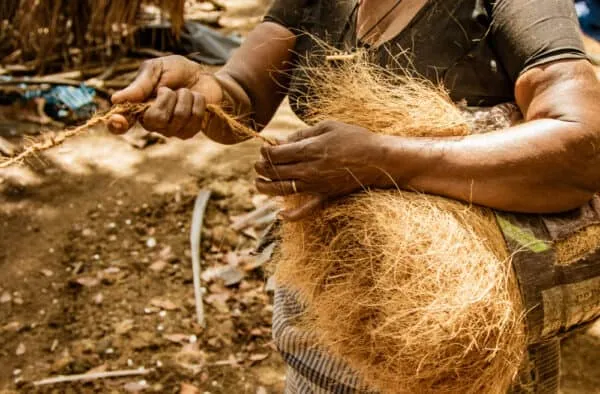
Photo: hands twisting natural plant fiber rope primitive survival cordage, via morningchores.com
Ask any seasoned survivalist what their top five priorities are in a genuine wilderness emergency, and you'll hear the usual answers—shelter, water, fire, food. Cordage almost never makes that list. That's a mistake.
Think about how many of those other priorities depend on rope or twine. Lashing poles together for a debris shelter. Rigging a ridgeline for a tarp. Setting snares. Hanging food out of bear reach. Building a bow drill fire kit. Cordage isn't just a tool—it's the thread that holds the entire survival picture together. And if you've never made it from raw natural materials, you're carrying a gap in your skill set that no amount of paracord in your pack can fully cover.
Let's fix that.
Why Store-Bought Rope Isn't Always the Answer
Paracord is fantastic. Nobody here is going to argue otherwise. But here's the thing: gear runs out, gets lost, or gets cut. In a long-term survival scenario—or even an extended backcountry emergency—your ability to produce cordage from the environment around you is worth more than any single spool you packed in.
Early Americans understood this intuitively. Indigenous peoples across North America had developed sophisticated cordage traditions long before European contact, using everything from plant stems and bark to animal tendons and rawhide. Settlers quickly learned these same techniques out of necessity. This wasn't primitive improvisation—it was practical engineering using locally sourced materials.
The good news? You can learn the fundamentals in an afternoon. The better news? Once you see how much raw cordage material exists in most North American environments, you'll never look at a patch of stinging nettles or a dead yucca plant the same way again.
The Best Natural Cordage Materials in North America
Not every plant makes good rope. The ones that do tend to share a few characteristics: long, flexible fibers, decent tensile strength when dried, and a willingness to hold a twist. Here are the heavy hitters:
Dogbane (Indian Hemp) — If you're in the eastern or central US, this is arguably your best wild cordage source. The inner bark fibers of dried dogbane stalks are incredibly strong and twist up beautifully. Native peoples used it for fishing lines, bowstrings, and carrying nets.
Stinging Nettle — Don't let the name scare you off. Once dried, nettles lose their sting, and the stem fibers they produce are among the strongest plant-based cordage materials in the temperate world. European peasants made linen-quality textiles from nettle for centuries.
Yucca — If you're in the Southwest or Southeast, yucca leaves are almost purpose-built for cordage. Pound a fresh leaf against a rock to separate the fibers, let them dry slightly, and you've got material ready to twist.
Cattail Leaves — More limited in strength than dogbane or nettle, but cattails grow in wetlands across virtually every US state. Good for lighter-duty lashing and weaving.
Animal Sinew — Tendons from deer, elk, or other game animals produce some of the strongest natural cordage available. It's labor-intensive to process, but sinew-backed bowstrings were the high-performance gear of the primitive world. When wet it stretches slightly; when dry it locks tight.
Rawhide Strips — Cut in a spiral from a fresh hide, rawhide strips can be twisted or braided into heavy-duty lashing material that shrinks and tightens as it dries—a feature, not a bug, when you're lashing tool heads or building structures.
The Reverse-Wrap: Your Most Important Technique
There are a dozen ways to make cordage, but the reverse-wrap (sometimes called the two-ply twist) is the one that matters most. It's fast, strong, and works with almost any fibrous material. Here's the basic method:
-
Gather and prep your fibers. For plant materials, extract the long inner fibers from dried stalks by rolling them under your boot or scraping with a stone. For fresh bark, peel it in long strips and let it wilt slightly.
-
Find the midpoint of your fiber bundle and introduce a bend. Hold that bend between your thumb and forefinger.
-
Twist the top strand away from you (clockwise, if you're looking down at it), then wrap it over the bottom strand toward you. Now the bottom strand becomes the top.
-
Repeat. Twist the new top strand away from you, wrap it over. Keep consistent tension and keep those twists tight and even.
-
Add new fibers by overlapping the ends of new material into the existing strands as you go. Stagger these additions so both strands aren't ending at the same point.
What you end up with is a two-ply cord that's significantly stronger than either strand alone because the opposing twists lock against each other under tension. For heavier rope, make several two-ply cords and reverse-wrap those together.
Processing Tips That Make the Difference
Raw material prep separates mediocre cordage from the kind that actually holds. A few things worth knowing:
-
Dry your plant fibers before twisting whenever possible. Green plant material shrinks as it dries and your cordage will loosen. Dogbane and nettle stalks should be harvested in late fall after the plant has died back, then processed.
-
Moisture is your friend with sinew. Slightly dampened sinew is far more workable than dry sinew. Wet it, work it, and let it set in its final twisted form.
-
Don't rush the fiber separation. The more thoroughly you break down your raw material into individual long fibers, the smoother and stronger your finished cordage will be. Retting (soaking plant stems in water for several days) is an old-world technique that loosens fibers dramatically.
-
Test as you go. Give your cordage a hard tug every few inches. Weak spots show up early, and it's far easier to fix them mid-process than after you've made twenty feet of rope.
Building the Habit Before You Need It
Here's the honest truth about cordage-making: it's one of those skills that requires hands-on repetition before it becomes genuinely useful in the field. Reading about the reverse-wrap is a start. Watching a YouTube video is better. But sitting down with a bundle of dried dogbane and actually working through it until your fingers understand the motion—that's where the skill lives.
Start simple. Harvest some cattail leaves this weekend and practice the basic two-ply twist while you're watching the game. Pick up some craft-store jute or hemp twine and experiment with three-strand braids. Then graduate to wild-harvested material when you feel the mechanics in your hands.
The primitive world didn't have hardware stores. What it had was knowledge, patience, and an intimate understanding of available resources. That combination built canoes, bows, shelters, and entire civilizations. A length of hand-twisted cordage isn't just a piece of rope—it's proof that you understand how to turn the landscape itself into a toolbox.
That's a skill worth owning.