Dead Steel, Living Edge: How to Hunt Down and Revive Vintage Blacksmith Tools That Still Outwork the Modern Stuff
There's a certain kind of Saturday morning that preppers live for. The kind where you're elbow-deep in a cardboard box at a rural estate sale, pulling out a hand-forged axe head that's been sitting in a barn since the Eisenhower administration — caked in surface rust, handle long gone, price tag reading four dollars. That axe, once you clean it up and rehang it, will probably outlast everything in your current gear bag.
Vintage blacksmith-made tools are having a quiet moment in prepper and homesteading circles, and for good reason. The craftsmanship that went into hand-forged steel before mass manufacturing took over was genuinely different — and in many cases, genuinely better. This isn't nostalgia talking. It's metallurgy.
Why Old Forged Steel Beats Modern Factory Metal
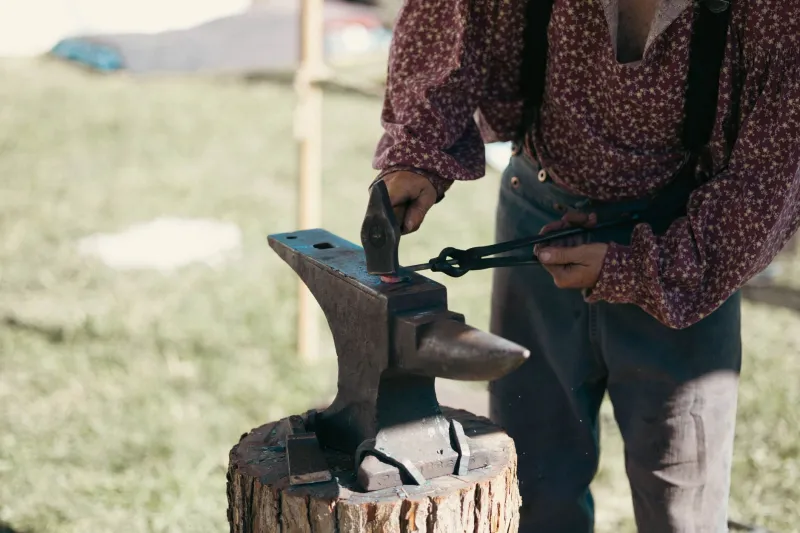
Here's the short version: most tools made before the mid-20th century were individually forged by skilled smiths using high-carbon steel. The forging process — heating metal and working it under a hammer — aligns the grain structure of the steel and creates a toughness that cast or stamped metal simply can't match.
Modern budget tools are often made from lower-carbon alloys, drop-stamped rather than hammer-forged, and finished to look good on a store peg rather than to hold an edge through hard use. When you're splitting wood, driving stakes, or working green timber in a survival situation, that difference matters.
A well-made vintage axe or broad hatchet will hold an edge longer, flex rather than snap under stress, and respond better to sharpening than most anything you'll find hanging on a big-box store rack today. Preppers who've made the switch tend not to go back.
Where to Actually Find This Stuff
You don't need to haunt specialty antique shops to build a solid collection. The best sources are often the least glamorous.
Estate sales are ground zero. Rural properties — particularly in the Midwest, Appalachia, and the South — frequently turn up old tool chests, barn finds, and workshop leftovers from people who actually used hand tools for a living. Get on estate sale notification lists through sites like EstateSales.net and show up early on day one.
Farm auctions are another goldmine. When a working farm changes hands, the tool inventory often goes at auction for fractions of replacement cost. Auctioneers don't always know what they have, which works in your favor.
Online marketplaces — eBay, Facebook Marketplace, Craigslist — can be hit or miss, but they're worth monitoring. Search terms like "vintage hand-forged axe," "antique blacksmith hammer," or "old broad hatchet" will surface results. Condition descriptions are unreliable, so learn to read photos carefully.
Flea markets and antique malls vary wildly by region. Rural flea markets in tool-heavy states like Ohio, Pennsylvania, and Tennessee tend to have better pickings than urban antique boutiques, where everything's been repriced for the decorator crowd.
The Buyer's Guide: What to Look For (and What to Walk Away From)
Before you hand over cash, do a quick field evaluation.
Check for cracks. Surface rust is almost always cosmetic and cleanable. Cracks in the eye of an axe or along the blade of a chisel are deal-breakers. Run your thumbnail across any suspicious lines — a crack will catch; a scratch won't.
Look at the forge marks. Hand-forged tools often show subtle hammer marks and slight asymmetries that machine-made tools don't. That's a good sign, not a flaw. It means a person made it with intention.
Test the steel with a file. A quick swipe of a cheap file across an inconspicuous spot tells you a lot. If the file skates off without biting, the steel is hard — that's what you want. If it cuts easily, the steel may be too soft to hold an edge.
Assess the geometry. On axes and hatchets, look at the bevel. A well-ground vintage tool will have a consistent, purposeful edge geometry. Randomly chipped or ground-down edges suggest abuse or someone's bad attempt at sharpening.
Don't panic over missing handles. A solid head with no handle is often a better buy than a questionable head with a cracked, wobbly original handle. Rehang it yourself and you control the result.
Restoration: Bringing Dead Tools Back to Life
Restoring a vintage tool doesn't require a full blacksmith setup. Most jobs need nothing more than what you probably already have in a basic shop.
Rust removal is step one. For light to moderate surface rust, a wire wheel on an angle grinder or a drill-mounted wire brush will handle most of it in minutes. For heavier rust, soak the tool in white vinegar for 12–24 hours, then scrub with a steel wool pad. Electrolytic rust removal — a simple setup using a battery charger, washing soda, and water — works well for heavily pitted pieces without removing good metal.
Sharpening comes next. Work through a progression of files and whetstones, establishing your bevel first with a mill bastard file, then refining with progressively finer stones. For axes, a puck-style sharpening stone works well in the field. For chisels and plane blades, a flat bench stone is the way to go.
Rehanging an axe is a skill worth learning. American-style hickory handles are still widely available at hardware stores and online. Fit the handle to the eye, drive a wooden wedge to lock it in place, then add a steel wedge perpendicular to the first. Properly hung, it won't come loose.
Protect the metal. Once clean and sharp, wipe down tools with a light coat of boiled linseed oil or paste wax to prevent future oxidation. Store them somewhere dry. That's it.
Real Preppers, Real Results
Talk to people who've been doing this for a while and the stories are consistent. One homesteader in rural Kentucky built his entire working tool collection — axes, adzes, drawknives, chisels, and hammers — from estate sales and auctions over about three years, spending less than $200 total. Another prepper in western Pennsylvania picked up a hand-forged felling axe at a farm auction for six bucks, restored it over a weekend, and says it's the best axe he's ever used, period.
These aren't outliers. They're what happens when you learn to look past the rust.
The Bigger Picture
Building a collection of restored vintage tools isn't just a budget move, though the economics are hard to argue with. It's also a hedge against supply chain fragility. When hardware store shelves go thin and shipping times stretch out, having a set of tools that don't depend on replacement parts or proprietary systems is a real form of preparedness.
More than that, there's something right about working with a tool that was made to last and has already proven it can. That old axe in the barn didn't survive a hundred years by accident. It survived because someone built it to endure.
That's the kind of gear worth having when it matters.