What Your Nose Knows: Reading Used Tools with Your Senses Before You Spend a Dime
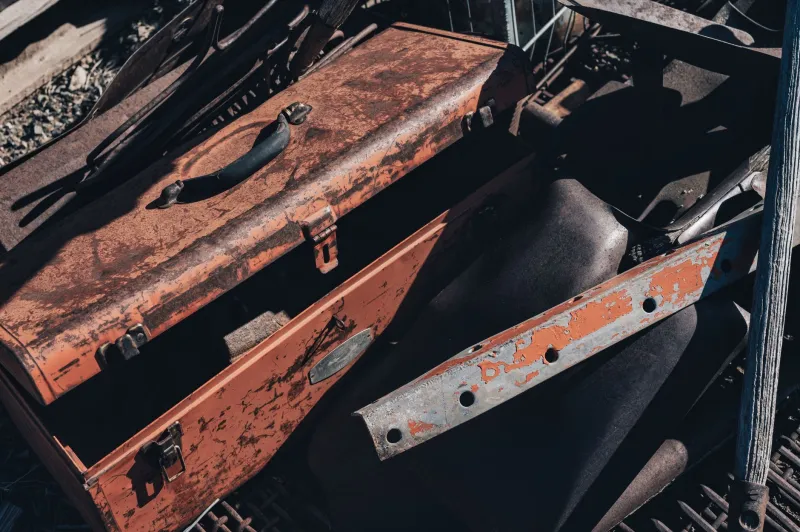
Walk into any decent flea market, estate sale, or antique barn in rural America and you'll find them: old tools, heaped in bins or laid out on tables, priced anywhere from a dollar to a hundred. Some of them are junk. Some of them are better than anything you can buy new. The trick is knowing the difference before you hand over your cash.
Most people approach tool evaluation the way they approach online shopping—they look at the surface and make a snap judgment. That's how good tools get passed over and bad ones end up in working kits. The people who consistently find the real scores—the old blacksmiths, the working woodwrights, the serious collectors—use all their senses. They smell things. They tap things. They heft things and close their eyes. They've developed a sensory vocabulary for tools that most modern people have completely lost.
Here's how to get it back.
Start with Your Hands, Not Your Eyes
The first thing most people do when they pick up a tool is look at it. Fight that instinct. Before you look closely, close your eyes and feel it.
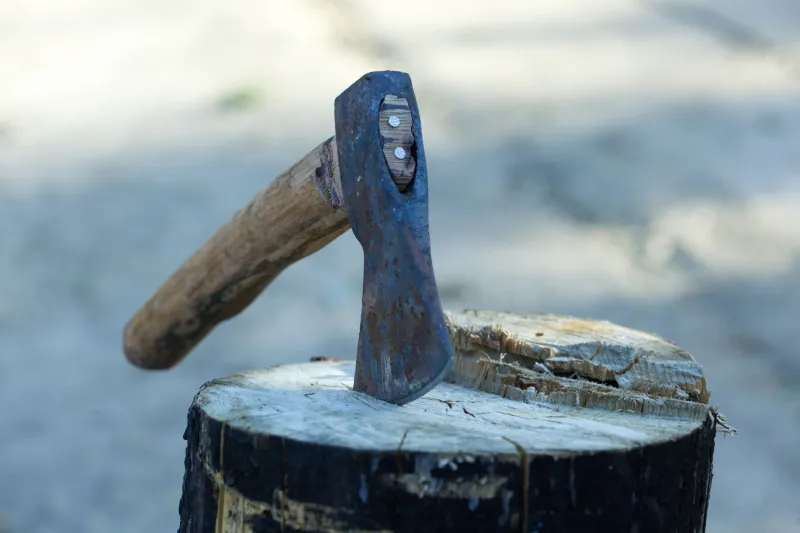
Weight distribution tells you enormous amounts about a tool's integrity. A properly made axe head should feel front-heavy in a very specific way—the mass concentrated at the bit, the poll balanced behind it, with the handle acting as a lever that channels force predictably. If an axe feels wrong in your hand—if the balance seems off or shifts when you move your wrist—something has changed. The handle may be the wrong length or taper for the head. The head may have been ground unevenly, removing material from one side. Or it may simply be a poorly made tool that was poorly balanced from the start.
Run your thumb along the flat of a blade. You're not checking for sharpness yet—you're checking for consistency. A properly forged blade will feel even, with no unexpected high spots or hollows. A blade that was ground aggressively to remove pitting may have subtle concavities that compromise its geometry. Your thumb will find these before your eyes do.
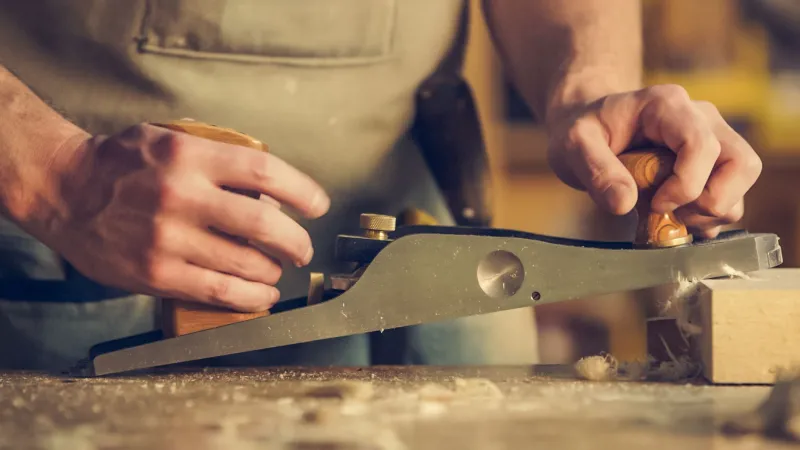
Check every joint and connection point. On a hammer, grip the head and try to move it on the handle. Any play at all is a problem—not necessarily a deal-breaker, but something to factor into your evaluation and your price negotiation. On a plane, work every adjustment mechanism. It should move with resistance but smoothly. Gritty, stiff, or sloppy adjusters tell you about how the tool was stored and maintained.
Now Smell It
This is the part that makes people look at you funny in the flea market. Do it anyway.
A tool that has been properly stored—kept dry, occasionally oiled, protected from humidity swings—has a specific smell. It's faintly metallic, slightly mineral, maybe with a trace of oil or wax. It smells like a tool that was cared for. This is your baseline.
Deviation from that baseline is information.
A sharp, acrid smell—almost chemical—on a metal surface often indicates active corrosion or the presence of chloride contamination, which means the tool was exposed to saltwater, road salt, or certain industrial chemicals. This kind of corrosion is more aggressive than standard surface rust and can penetrate deeper into the metal. It's not always a dealbreaker for mild steel, but it's a warning.
A musty, organic smell on a wooden handle means moisture. The wood absorbed water at some point, and depending on how long and how much, it may have begun to degrade internally. Press the handle firmly—does it feel solid and slightly resonant, or does it feel slightly soft and dead? Wet wood that has dried can check and crack in ways that compromise the handle's structural integrity even when it looks okay on the surface.
Oil that smells rancid—like old cooking fat gone bad—indicates the tool was treated with an animal-fat-based oil that wasn't refreshed. This isn't catastrophic, but it does mean the protection has broken down and the tool has been unprotected for some period. The rancid smell itself can also indicate the presence of organic contamination that can accelerate rust.
Conversely, a tool that smells strongly of fresh oil or petroleum products may have been recently cleaned and treated specifically to sell. This isn't automatically suspicious—a conscientious seller does this—but it does mean you need to look more carefully at what the fresh oil might be concealing.
Listen When You Tap
Pick up a wooden-handled tool and tap the handle against your palm, or tap the head lightly against the edge of a table. Listen to the sound.
A solid, well-fitted wooden handle produces a clean, slightly resonant knock. A handle that has dried and shrunk away from the tool head, or that has developed internal cracking, produces a duller, slightly hollow sound. This is the same principle a doctor uses when percussing a patient's chest—a solid structure sounds different from one with air or void inside it.
On cast iron tools—old vises, bench planes, drawknife frames—a light tap with a knuckle will tell you whether the casting is sound. A solid cast iron piece rings faintly when tapped. A cracked casting produces a flat, dead thud. This is one of the most reliable ways to detect hairline cracks that are nearly invisible to the eye, especially in complex castings where cracks can hide in corners and transitions.
A file drawn lightly across a blade—with the blade held firmly—produces a tone that experienced tool people use to assess hardness. A properly hardened steel edge produces a higher-pitched scraping sound and offers resistance to the file. Soft or improperly tempered steel sounds duller and the file bites easily. You won't develop this skill overnight, but with practice it becomes genuinely useful.
Reading Rust Like a Book
Not all rust is equal, and learning to read it is one of the most valuable skills in used-tool evaluation.
Light surface rust—a uniform reddish-brown patina with no pitting—is essentially harmless and often a sign that a tool has been stored in a humid environment without oil. This cleans up easily and the underlying metal is typically sound.
Pitting is more serious. Small pits in the metal surface indicate that corrosion has gone deeper than the surface layer. Shallow pitting on the flat of a plane iron or the cheek of an axe is cosmetic. Deep pitting on a cutting edge is a structural problem—those pits create stress concentration points and weak spots that will eventually crack or chip under use.
The pattern of rust tells you about storage conditions. Rust that appears uniformly across a surface suggests general humidity exposure. Rust concentrated in one area—especially near a joint, a crack, or a transition—suggests water was pooling or wicking into that specific spot. That's where you look most carefully for hidden damage.
Handle wear is its own kind of story. A handle worn smooth and dark from decades of use has been shaped by thousands of hours of work to fit human hands. That's not damage—that's refinement. A handle worn unevenly, with one side more compressed than the other, tells you the previous user had a dominant grip pattern and worked the tool hard. That's fine. A handle with sharp gouges or impact marks that aren't consistent with normal use raises questions about how the tool was treated.
Score Versus Scrap: Making the Call
Here's the practical framework. A tool is a score when: the metal is sound under surface rust, the balance and geometry feel right, the wood is solid and dry, and the mechanism (if any) moves properly. A tool is scrap when: there's deep pitting on critical surfaces, the casting rings dead, the handle is soft or cracked through, or the geometry has been altered beyond recovery.
The gray zone is where your sensory evaluation pays off. A tool that looks bad but smells right, sounds solid, and balances well is usually salvageable. A tool that looks clean but smells wrong, sounds hollow, or feels off in the hand is often hiding a problem.
Trust your senses. They were built for exactly this.