Your Hands Are Smarter Than Your Gear: Training the Touch That Warns You First
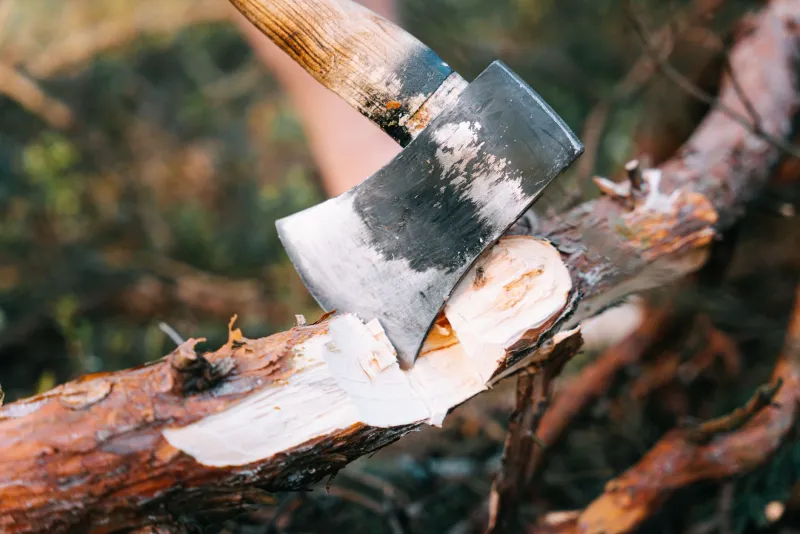
You're splitting wood. Third hour in. The maul feels right—same weight, same arc, same satisfying thud. Then something shifts. Not visibly. Not loudly. Just a faint wrongness in the handle's feedback, a vibration that traveled up your forearm and didn't feel like the last fifty swings.
You stop. You look. There's a hairline crack running up through the grain, three inches from the head.
You didn't see it. You felt it.
That's proprioception at work—your nervous system's ability to read mechanical information through muscle, tendon, and skin. It's not a metaphor or a survival-culture cliché. It's a documented neurological function, and it's one of the most practical skills a primitive tool user can develop. The problem is that most of us have let it go almost completely dormant.
What Proprioception Actually Is
Your muscles, joints, and connective tissues are loaded with sensory receptors—Golgi tendon organs, muscle spindles, Ruffini endings in the skin. These structures constantly transmit positional and mechanical data to your brain, mostly below conscious awareness. When you catch a falling glass without thinking, that's proprioception. When an experienced carpenter knows a board is slightly out of level before he checks it, that's proprioception.
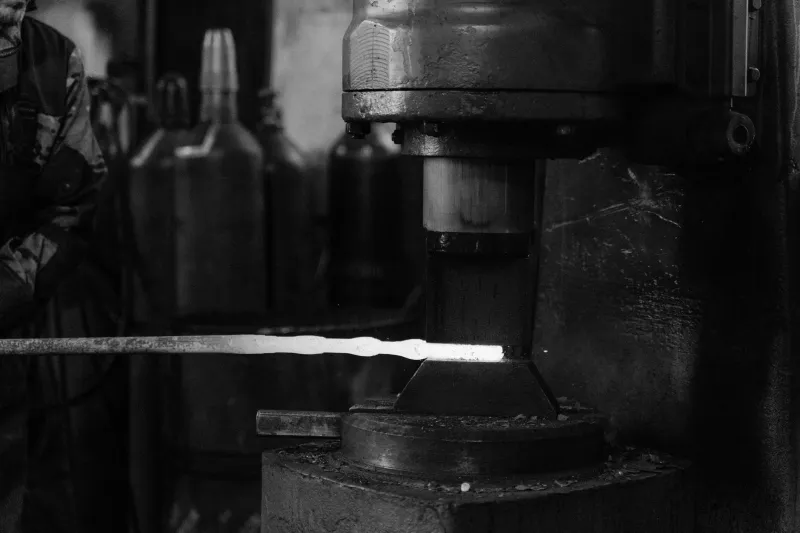
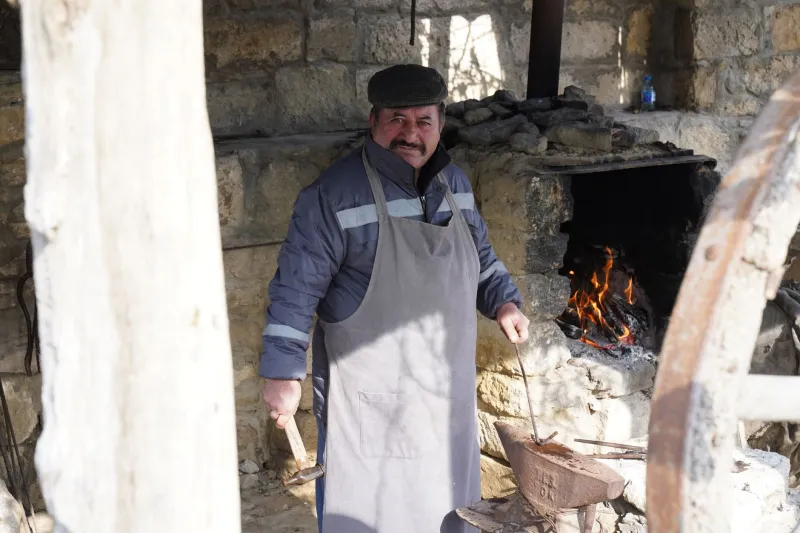
The system is extraordinarily sensitive when trained. Research on skilled craftspeople—woodworkers, blacksmiths, surgeons—consistently shows enhanced tactile discrimination and vibration sensitivity compared to untrained individuals. These aren't people born with special hands. They're people who spent years working with unforgiving materials that punished inattention and rewarded sensitivity.
Here's the catch: proprioception degrades with disuse, and modern tool design actively encourages disuse. Padded handles, vibration-dampening grips, power-assist mechanisms—all of these are comfort features that simultaneously filter out the mechanical feedback your hands need to stay sharp. You're not just losing the information. You're training your nervous system to stop listening for it.
Why Primitive Tools Train This Better Than Anything Else
A modern power tool operates in one register: on or off. The feedback loop is basically nonexistent. A stone hand axe, a wooden mallet, a bone-handled knife—these tools communicate constantly. Every grain shift in the wood you're working, every micro-change in stone hardness, every minute wobble in your grip telegraphs through the tool directly into your hand.
There's no dampening layer. No cushioning. No electronic governor smoothing out the irregularities.
This is uncomfortable at first. Your hands will tire faster. You'll notice aches in muscle groups you didn't know you were using. That's the point. Discomfort is information, and learning to read it is the whole game.
Knapping flint is one of the best proprioceptive training exercises available to a survival practitioner. The material is brutally honest. Strike at the wrong angle by two degrees and you'll know immediately—not because you can see the error, but because the percussion feedback is completely wrong. The crack propagates incorrectly, the flake releases badly, and the sensation in your holding hand tells you before your eyes process the result. Experienced knappers develop what they describe as a 'feel' for the stone—an intuitive sense of where fracture lines want to run, how much force is needed, when the material is stressed incorrectly. That's not magic. That's trained proprioception operating at a high level.
Practical Drills for Building Tool Sense
You don't need to become a master knapper overnight. Here are concrete ways to start building this awareness into your regular practice.
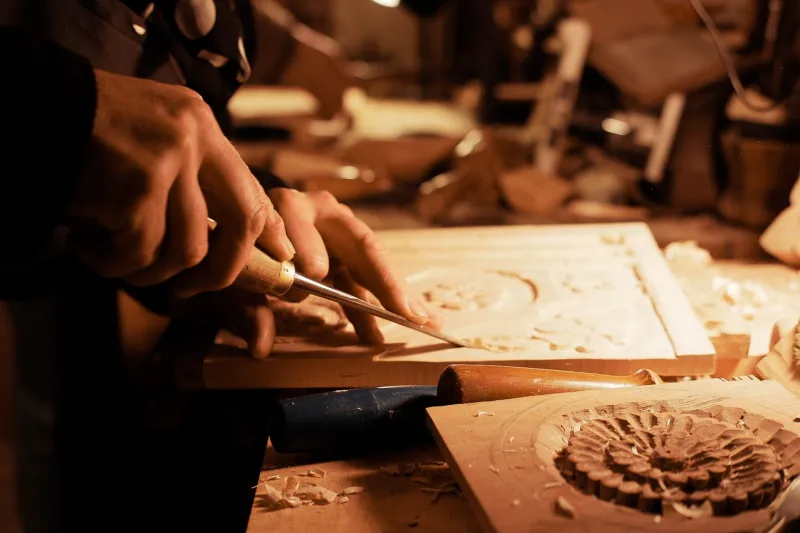
Work blindfolded on familiar tasks. Take a task you can already do safely—wood carving, rope work, basic joinery—and do it with your eyes closed for short intervals. You'll be surprised how much information your hands already carry that your eyes were overriding. Start with five minutes and build up.
Use unhandled or minimally handled tools deliberately. A raw wooden dowel as a mallet handle instead of a padded grip. A stone scraper held directly rather than hafted. The goal isn't to be uncomfortable forever—it's to recalibrate your baseline sensitivity.
Pay attention to vibration signatures. Every tool has a characteristic feel when it's working correctly. Start mentally cataloging these. A well-set wedge sounds and feels different from one that's about to blow. A properly tensioned bowstring has a distinct resonance. Build a reference library in your hands, not just your head.
Learn to feel fatigue before it becomes failure. This is the most tactically important skill. Muscle fatigue has a texture—a heaviness, a subtle loss of fine control. Learning to recognize that feeling at 60% capacity rather than 95% is what keeps you from making the dangerous mistake at the end of a long day. Primitive tool work, with its higher physical demand and more direct feedback, accelerates this learning dramatically.
The Threat Detection Angle
Here's where this goes beyond craft and into genuine survival application. The same proprioceptive sensitivity that tells you your axe handle is failing also picks up environmental information that your other senses miss.
Vibration through the ground. Changes in footing stability. The subtle shift in air pressure that precedes a large animal moving through brush. Experienced hunters and woodsmen describe a kind of whole-body awareness—a sense that something has changed before they can articulate what—that comes directly from years of working with their hands in demanding physical environments.
This isn't mysticism. It's a nervous system that's been trained to process low-level mechanical data efficiently and surface it to consciousness quickly. Electronic sensors are impressive, but they detect what they were programmed to detect. A trained human nervous system detects change—and in a survival situation, unexpected change is almost always the thing that matters.
The Bottom Line
No app, sensor, or smart device gives you the feedback loop that primitive tool work builds into your body over time. The hands that have learned to read stone and wood and bone don't just make better tools—they make better decisions, faster, under conditions where thinking time is a luxury you don't have.
Start using your hands for hard things. Let them get uncomfortable. Let them learn.
They'll remember. And when the moment comes, they'll tell you before anything else does.