Brain, Bark, and Ash: The Primitive Tanner's Path from Raw Hide to Rugged Leather
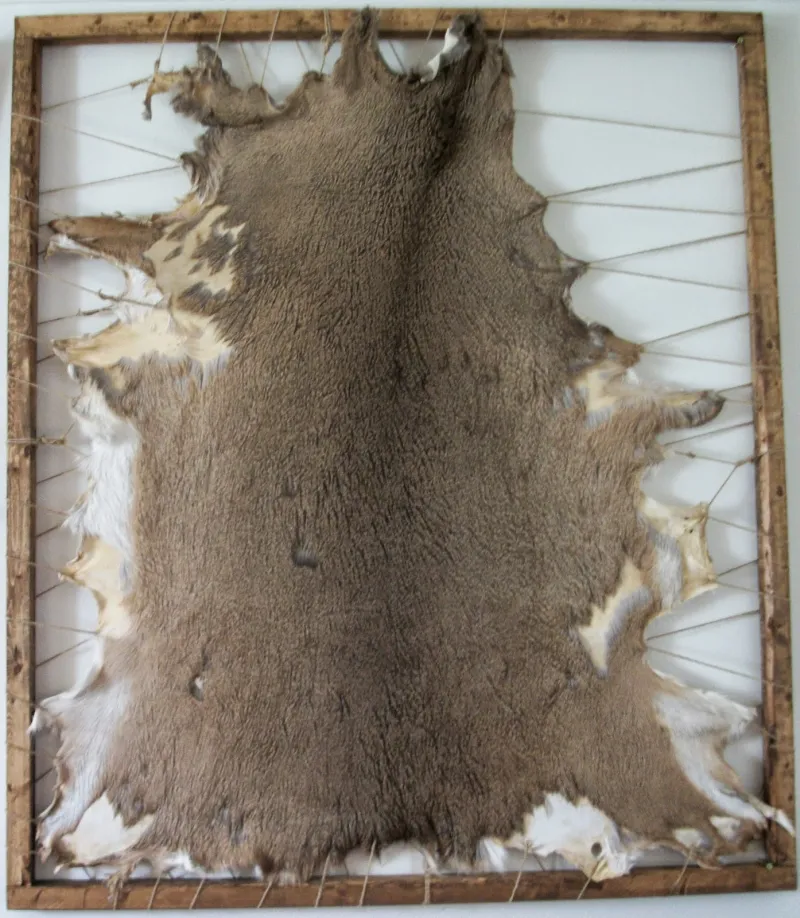
Photo: primitive hide tanning deer skin stretched on wooden frame outdoor, via birchandbriar.com
There's a saying that's been floating around primitive skills circles for decades: every animal has just enough brain matter to tan its own hide. Whether that's perfectly true in every case is up for debate, but the core idea isn't — nature provided everything our ancestors needed to turn a raw, rotting skin into something that could last for years. Clothing, moccasins, bags, shelter panels, knife sheaths. The hide from a single deer or elk kill was genuinely valuable in ways most modern folks have completely forgotten.
For preppers serious about long-term self-sufficiency, hide tanning sits near the top of the list of skills that are both deeply practical and almost entirely lost from mainstream American life. You can stockpile synthetic gear, and there's nothing wrong with that. But if you want to close the loop on a hunt — to walk away from an animal with meat, bone tools, sinew cordage, and usable leather — tanning is the missing piece.
Let's get into how it actually works.
Why Tanning Matters in a Survival Context
A fresh hide is essentially a piece of meat. Left alone, it will rot. The entire point of tanning is to chemically alter the protein structure of the skin so that it becomes stable, flexible, and resistant to decomposition. There are several different ways to accomplish this using only natural materials, and the method you choose will affect the final product's characteristics — how soft it is, how water-resistant, how durable under hard use.
For preppers, the practical applications are significant. Leather can be fashioned into footwear, gloves, belts, harnesses, pouches, and even primitive body armor. Rawhide — hide that's been dried and scraped but not fully tanned — has its own uses as lashing material, drum heads, and structural reinforcement. Understanding the difference between rawhide and fully tanned leather, and knowing how to produce both, gives you serious options when manufactured goods are no longer available.
Step One: The Fresh Hide and the Fleshing Process
Everything starts at the kill. The sooner you can begin processing the hide, the better. Heat accelerates decomposition, so in warm weather you're working against the clock.
Once the animal is skinned, the hide needs to be fleshed — meaning all fat, meat, and membrane scraped from the skin side. Traditional tools for this include a curved bone or antler scraper, though a dull drawknife or even a split hardwood paddle will work. You're working on a beam (a smooth, rounded log works well) and scraping downward with firm, overlapping strokes. This step is unglamorous and time-consuming. Do it thoroughly anyway. Leftover fat will interfere with every tanning method that follows.
Once fleshed, the hide can be worked fresh, or it can be preserved temporarily by salting, drying into rawhide, or freezing if you have that option.
Brain Tanning: The Method of the Great Plains
Brain tanning is the technique most closely associated with Plains Indian cultures, and it produces the softest, most supple buckskin you'll ever handle. The finished product has a characteristic creamy color and a suede-like feel. The tradeoff is that brain-tanned leather is not waterproof — it will stiffen if it gets wet and dries without being worked. Smoking the finished hide resolves this problem and is considered the final essential step in traditional brain tanning.
The process goes like this:
Prepare the brain emulsion. Boil or simmer the brain (deer, elk, and most other mammals have enough to tan their own hide) with a small amount of water until it breaks down into a smooth, fatty liquid. Some traditional tanners added rendered fat or egg yolk to extend the emulsion for larger hides.
Soak the hide. Work the brain mixture thoroughly into both sides of the hide, then roll it up and let it sit for several hours or overnight. The fatty acids in the brain are penetrating the fiber structure of the skin, lubricating and preserving it.
Work it continuously as it dries. This is the labor-intensive heart of brain tanning. As the hide begins to dry, you must work it constantly — stretching, pulling, wringing, and softening every square inch. The moment a section dries without being worked, it stiffens permanently. Traditional tanners used a variety of tools for this: a staking post (a sharpened stake driven into the ground), a lacing frame, or simply their hands and thighs. The hide can be re-wetted and worked multiple times if needed.
Smoke the finished hide. Hang the tanned hide over a slow, smoldering fire (rotten wood produces excellent smoke) and let it absorb the smoke evenly on both sides. This smoking step sets the tanning and allows the leather to be re-softened after getting wet.
Bark Tanning: The Pioneer Method
If brain tanning was the technique of the frontier hunter, bark tanning was the method of the colonial and pioneer craftsman. It produces a firmer, harder leather — the kind used for boot soles, harness leather, and heavy-duty straps. It's also significantly more water-resistant than brain-tanned buckskin.
The active ingredient is tannin, a plant-based compound found in high concentrations in oak bark, chestnut bark, hemlock bark, and sumac leaves. The hide is soaked in progressively stronger tannin solutions over weeks or even months, gradually transforming it from raw skin to stable leather.
For a simplified field version:
- Dehair the hide first. This is done by soaking it in a wood ash and water solution (lye water) for several days until the hair slips free easily.
- Prepare a bark liquor by boiling crushed oak bark in water. The darker and stronger the solution, the further along the tanning process will move with each soak.
- Submerge the dehaired hide and allow it to soak, refreshing the solution periodically with stronger batches.
- Full bark tanning traditionally takes months. For a rougher, functional result in the field, even a few days of soaking will impart some stability.
Oak galls — those strange round growths you see on oak trees caused by wasp larvae — are exceptionally high in tannin and were historically used to accelerate the process. If you're experimenting with bark tanning, track down some oak galls and add them to your bark liquor.
Comparing the Methods
Brain tanning wins for soft goods: clothing, bags, moccasins, gloves. It requires more continuous labor but fewer materials. Bark tanning wins for structural leather: soles, belts, sheaths, straps. It requires more time but less moment-to-moment effort. Some traditional cultures combined elements of both, using bark tannins for initial preservation and brain or fat for final softening.
A third method worth knowing is rawhide processing — simply scraping and drying a hide without any tanning agent. Rawhide is stiff as a board when dry and soft when wet, which makes it uniquely useful for binding tool handles, making snowshoe frames, and constructing containers that will harden around their contents as they dry.
Getting Started Without a Full Setup
You don't need a working farm or a recent elk hunt to start practicing. Many meat processors and butcher shops will give away or sell hides cheaply. Deer hides in particular are often discarded during hunting season. Start with a small piece, practice your fleshing and scraping technique, and work through a brain tan on a manageable section before committing to a full hide.
The learning curve is real, but every step teaches you something. The feel of a properly fleshed hide versus a poorly fleshed one. The way leather responds when it's being worked correctly during drying. The smell of smoke setting into finished buckskin.
This is a skill that took generations to develop and was nearly lost in a single century of industrialization. The good news is it's not gone. And for anyone serious about true self-reliance — the kind that doesn't depend on a supply chain — learning to take an animal from field to finished leather is one of the most complete expressions of that independence you'll find.