Clouds, Crows, and Creaking Joints: How Settlers Read the Sky Before Doppler Existed
Your phone dies on day two of a backcountry trip. The clouds are doing something weird. The wind shifted about an hour ago, and now the birds have gone completely quiet. Do you know what that means? Nineteenth-century farmers absolutely did—and the ones who paid attention to those signs lived to plant another season.
We've handed so much of our situational awareness over to technology that most people couldn't tell you the difference between a mackerel sky and a fair-weather cumulus if their life depended on it. Out in the backcountry, it genuinely might. This isn't about being nostalgic for the old days. It's about building a layer of environmental intelligence that no dead battery can take from you.
The Sky Is Talking. Most People Stopped Listening.
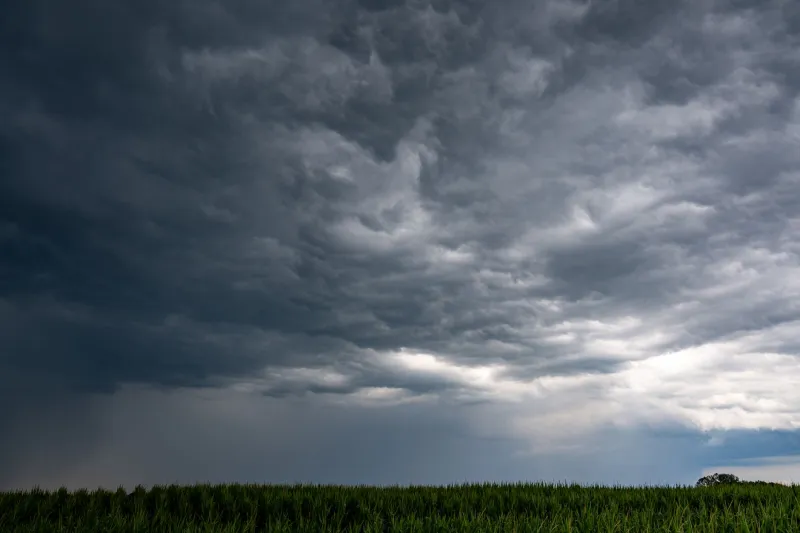
Start with clouds, because they're the most reliable storytellers in the sky. High, wispy cirrus clouds—the kind that look like stretched cotton or mare's tails—usually mean a weather system is approaching within 24 to 48 hours. Old farmers called them "mare's tails and mackerel scales," and the full saying went: mare's tails and mackerel scales make tall ships carry low sails. That's not poetry. That's pattern recognition passed down through generations of people who couldn't afford to be wrong.
A mackerel sky—those rippled, fish-scale cloud formations—often signals rain within 12 to 18 hours. The higher and thinner those ripples sit, the more time you've got. When they drop lower and thicken, you'd better be thinking about shelter.
Lenticular clouds, those strange lens-shaped formations that hover over mountain peaks, are a backcountry hiker's warning flag. They form when moist air is forced up and over elevated terrain, and they're almost always a sign of strong winds at altitude and instability in the atmosphere. Indigenous peoples across the American West recognized these formations and adjusted their travel plans accordingly. Smart move then. Smart move now.
Wind Direction Tells You Where the Weather Is Coming From—and Where It's Going
In most of the continental United States, weather systems generally travel from west to east. That's your baseline. A wind coming out of the southwest is often warm and moist—it's pulling Gulf air northward, which can mean rain. A northwest wind usually brings cooler, drier air behind a passing front. East or northeast winds are the ones that made old-timers nervous. In much of the country, an easterly wind is a sign that a low-pressure system is approaching, and low pressure means storms.
Pay attention to wind shifts. A steady wind that suddenly backs—meaning it shifts counterclockwise, say from south to southeast to east—is a strong indicator that a storm system is closing in. A veering wind, shifting clockwise from south to southwest to west, often signals clearing conditions. Sailors and farmers both lived by these shifts. You should too.
Smell the air when the wind changes. Before rain, the atmosphere releases petrichor—that earthy, almost electric scent that most people associate with storms. Plants release oils into the air under low pressure. Swamps and wetlands get more pungent. If you're hiking through the Appalachians or the Ozarks and the air suddenly smells richer and heavier, start thinking about where you're going to wait out the weather.
Animal Behavior Is One of the Most Reliable Forecasting Tools You'll Ever Have
Animals don't have weather apps either, but they've been reading atmospheric pressure for millions of years. Their instincts are calibrated in ways ours have gone soft.
Birds are your first indicator. When birds fly low, pressure is dropping—low pressure makes it harder for them to fly at altitude, and insects also drop lower before a storm, pulling insect-eating birds down with them. When swallows are swooping high in lazy arcs, conditions are stable. When they're skimming the ground in tight patterns, something's coming. Geese and ducks that suddenly move inland from open water are reading something you're not.
Cows and horses have long been observed lying down before a storm—possibly to preserve a dry patch of ground, possibly responding to pressure changes. Whether that's reliable science or solid folklore, generations of farmers treated it as gospel, and it was right often enough to stick around. Watch the livestock if you're near a farm. Watch the deer if you're not.
Frogs get louder before rain. Bees head back to the hive. Ants build up their mound entrances. Spiders abandon their webs or build them in protected spots. These aren't superstitions—they're the accumulated observations of people who watched the natural world closely because their survival depended on it.
Reading the Morning and Evening Sky
You've probably heard the old saying: red sky at night, sailor's delight; red sky in morning, sailor's take warning. That one actually has meteorological legs. A red evening sky often means dust particles are suspended in dry, high-pressure air moving in from the west—fair weather incoming. A red morning sky means that high-pressure system has already passed east, and low pressure may be following behind it.
A ring around the moon—called a lunar halo—is caused by ice crystals in high cirrus clouds, the same clouds that precede incoming weather systems. The old rule was: the closer the ring, the sooner the rain. Wider rings meant more time before the storm arrived. It's not foolproof, but it's directionally accurate more often than not.
Dew on the grass in the morning is actually a positive sign. Heavy dew forms under clear skies with calm winds—conditions that favor fair weather continuing. If you wake up and the grass is bone dry after a cool night, that lack of dew may indicate cloud cover or wind, both of which can signal unsettled weather ahead.
Building the Skill Takes Time and Attention
Here's the honest truth: none of these signs works perfectly in isolation. What made nineteenth-century farmers reliable weather readers wasn't one magic indicator—it was the habit of reading multiple signs simultaneously and cross-referencing them. The clouds said one thing, the wind confirmed it, and the animals sealed the deal.
The way to build this skill is the same way you build any primitive skill: practice it before you need it. Start paying attention to the sky every day. Note what the clouds look like in the morning and what the weather does by afternoon. Track wind shifts. Watch the birds. Keep a simple journal if that helps. Within a season, you'll start seeing patterns that your ancestors would have recognized immediately.
Out in the backcountry, that kind of awareness is worth more than a five-day forecast from an app you can't access. Technology fails. Observation doesn't—not if you've put in the time to develop it.
The wild doesn't care whether you checked the weather before you left. It only cares whether you can read what it's telling you right now. Learn to listen.