Hammer It Out: Why Knowing How to Fix Your Tools Is the Ultimate Survival Skill
Here's a scenario worth thinking about. You're six months into a long-term grid-down situation. Your best hatchet — the one you've relied on for splitting kindling, notching shelter poles, and processing game — has a cracked eye and a chipped bit. In the old world, you'd drive to the nearest farm supply store and grab a replacement. In this world, that's not happening.
What do you do?
If your answer is "dig through my stockpile for a backup," you're thinking like a consumer. If your answer is "fire up the forge and fix it," you're thinking like someone who's actually going to make it.
Tool repair through basic blacksmithing isn't just a cool heritage skill. It's a genuine force multiplier for anyone serious about long-term preparedness. And the good news? You don't need a professional shop, a gas forge, or a lifetime of training to get started. You need some heat, a hammer, an anvil, and a willingness to learn.
Why Buying New Is a Fragile Strategy
American consumer culture has conditioned most of us to treat tools as disposable. Something breaks, you replace it. That model works fine when supply chains are humming and your debit card has room on it. But preppers — real ones — understand that dependency on external systems is a vulnerability, not a convenience.
Every tool you own that you can't repair is a liability with an expiration date. High-quality hand-forged tools are built to last generations, but only if someone knows how to maintain them. A hairline crack in a hammer poll, a bent blade on a drawknife, a sprung jaw on a set of tongs — none of these are death sentences for a tool if you have even basic metalworking knowledge. But without that knowledge, a fixable tool becomes landfill.
The old-timers understood this. Frontier blacksmiths weren't just making tools — they were the community's repair infrastructure. When a farmer's plow blade broke, the smith fixed it. When a woodcutter's axe needed re-tempering after a bad grind, the smith handled it. That knowledge kept communities functional. Losing it made us dependent.
The Core Skills That Actually Matter
You don't need to master every corner of the blacksmithing craft to handle field repairs. There are a handful of core techniques that cover the vast majority of tool problems you're likely to encounter.
Drawing Out and Reshaping
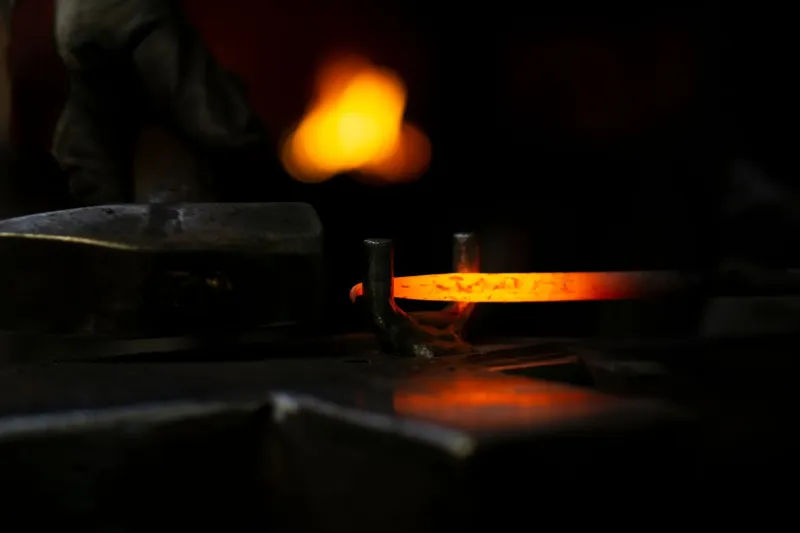
When a blade edge gets chipped, rolled, or cracked, the answer is often to reheat the steel and work it back into shape. Drawing out — stretching the metal along its length using hammer blows on an anvil — lets you reshape a damaged edge without losing the tool entirely. It takes practice to get the hammer angles right, but it's one of the most useful moves in the repair toolkit.
Welding Cracks with Forge Welds
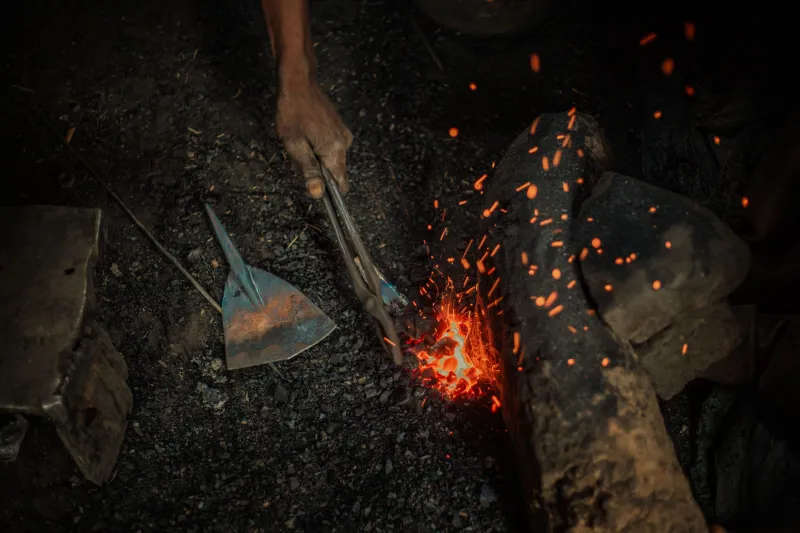
Forge welding — joining two pieces of steel by heating them to near-melting and hammering them together — sounds intimidating, but it's been the standard repair method for cracked tools for centuries. A cracked axe eye or a broken handle socket can often be forge-welded back to full strength. The joint, when done right, is actually stronger than the surrounding metal.
Re-tempering After Repair
This is where a lot of DIY repair jobs fall apart. Heat treating — the process of hardening and then tempering steel — is what gives a blade its edge-holding ability. If you repair a tool but skip re-tempering, you'll end up with steel that's either too brittle or too soft. The basic process involves heating the steel to the right temperature (watch for color — a bright orange-red for most carbon steels), quenching in oil or water depending on the alloy, then drawing the temper back by reheating to a lower temperature until the steel surface shows the right oxide color. Straw yellow to light purple is the sweet spot for most cutting tools.
Handle Fitting and Eye Repair
A loose or broken handle is one of the most common tool failures, and fixing it often involves more than just swapping out the wood. If the eye of an axe or hammer has deformed or cracked, it needs to be addressed at the forge before a new handle will seat properly. Drifting — using a tapered steel tool to reshape the eye back to its correct dimensions — is a simple technique that takes minutes once you've done it a few times.
Setting Up a Field-Capable Repair Station
You don't need a purpose-built blacksmith shop to handle most repairs. A surprisingly functional setup can be assembled from modest components.
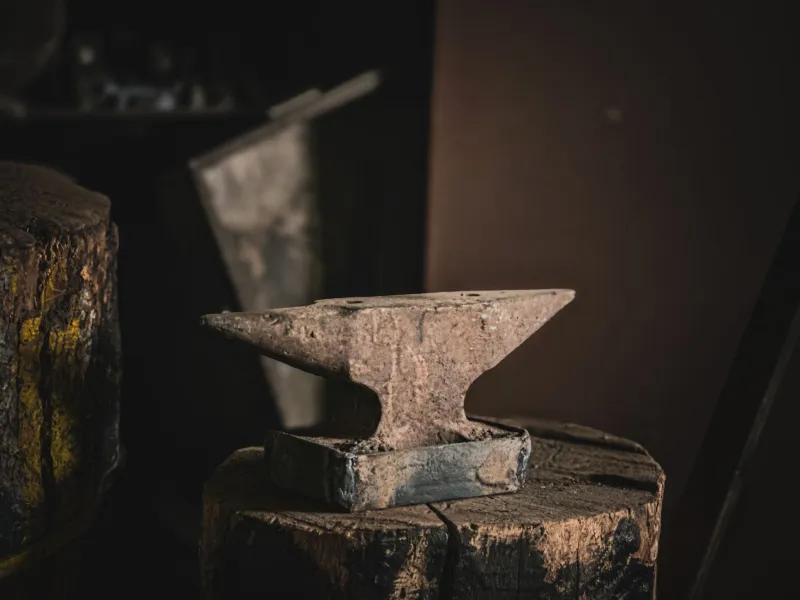
A solid anvil — even a chunk of railroad track will do in a pinch — gives you a hard, flat surface to work against. A simple coal or propane forge gets your metal hot enough for most repair work. A basic set of tongs, a cross-peen hammer, and a couple of punches and drifts round out the essentials. Add a bucket of quench oil and a wire brush, and you've got everything you need for the majority of tool repair jobs.
If you're building toward a homestead or retreat setup, a proper post vise is worth its weight in gold. Holding work securely while you hammer is something you'll appreciate deeply the first time you try to do it without one.
Learning Before You Need It
The worst time to learn forge repair is when you actually need it. Like any physical skill, blacksmithing requires muscle memory and pattern recognition that only comes from repetition. The good news is that practice is cheap — you can buy old, beat-up tools from flea markets and estate sales for next to nothing and use them as learning material.
Local blacksmithing guilds exist in most states, and many community colleges offer introductory metalworking courses. YouTube has a legitimate wealth of instructional content from working smiths. The American Blacksmith and Toolsmith community is alive and active, and most experienced smiths are remarkably generous with their knowledge.
Start simple. Fix a cracked hammer head. Re-temper a soft chisel. Reshape a rolled axe bit. Each repair teaches you something that no book can fully convey, and each success builds the confidence to tackle the next problem.
The Mindset Shift That Changes Everything
There's a deeper point buried in all of this. Learning to repair your own tools isn't just about practical survival capability — though it absolutely is that. It's about changing your relationship with the objects you depend on.
When you understand how a tool is made, you understand how it fails. When you understand how it fails, you can prevent those failures. When you can prevent and repair failures, you're no longer a consumer of tools — you're a steward of them. That's a fundamentally different relationship, and it's the one that people who actually survive hard times have always had with their equipment.
The tools worth owning are worth fixing. And the skills worth building are the ones that keep everything else working.
Forge your survival. Don't outsource it.