Twist, Pull, Repeat: The Primitive Cordage Skills That Could Save Your Life
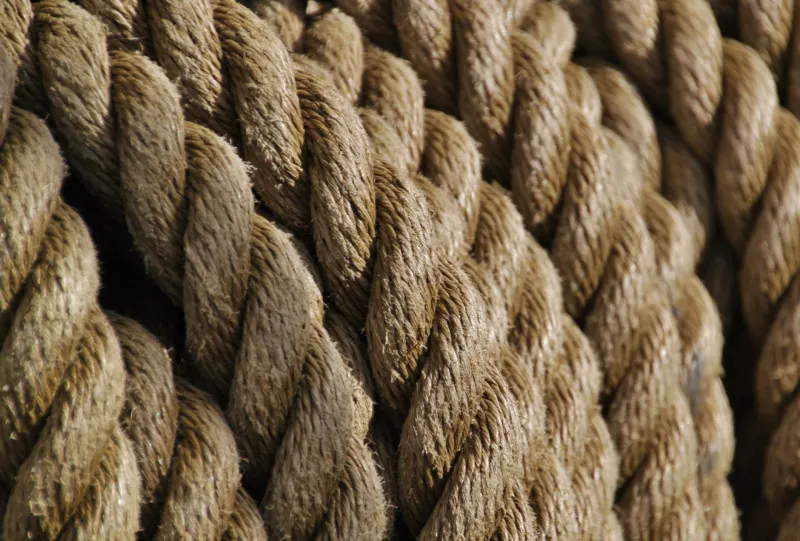
Walk into any outdoor retailer and you'll find shelves stacked with paracord, kernmantle rope, and braided nylon rated to hold a truck. It's good stuff. We're not here to argue against modern cordage. But here's the thing about supply chains — they're only reliable until they're not. A serious prepper doesn't just stock tools. A serious prepper learns to make them.
Cordage is one of those skills that sounds almost too simple to bother with. You twist some plant fibers together, right? How hard can it be? Harder than you'd think — and far more rewarding once you get it right. Natural rope-making is a craft that sustained every human civilization on earth for thousands of years before the first nylon strand was ever extruded. The techniques haven't changed much. The plants haven't changed at all.
Why Cordage Is the Backbone of Primitive Survival
Think about how many survival tasks require some form of rope or lashing. Shelter construction. Snare building. Bow-drill fire kits. Fishing line. Pack frames. Knife handles. Raft lashing. The list runs long. If you've read our piece on primitive trapping, you already know that snares live and die by the quality of their cordage. A snare made from weak, poorly twisted fiber won't hold a rabbit, let alone anything larger.
Cordage isn't just a convenience in a survival scenario — it's infrastructure. Master this skill and you gain access to dozens of downstream capabilities. Neglect it and you're always one frayed piece of paracord away from a serious problem.
The Best Natural Fiber Sources in North America
Not every plant makes good rope, but you might be surprised how many do. Here are the three that consistent practitioners keep coming back to:
Dogbane (Apocynum cannabinum) — This is widely considered the gold standard of North American natural cordage. The inner bark fibers are long, strong, and relatively easy to process. Native peoples across the continent used dogbane extensively for fishing nets, bowstrings, and carrying straps. The stalks need to be harvested in late fall after they've dried on the plant, then carefully retted to separate the outer bark from the inner fiber bundle. It takes patience, but the result is a fine, incredibly strong cordage that outperforms most natural alternatives.
Milkweed (Asclepias syriaca) — Common milkweed is everywhere across the eastern and central US, which makes it an obvious candidate. The bast fibers in the stalk aren't quite as long as dogbane, but they're workable and strong enough for most camp tasks. Milkweed cordage has a slightly softer texture, which can actually be an advantage for applications where you need something gentler — like securing a splint or lashing a bundle.
Inner Bark Fibers — Basswood, cedar, and willow are the heavy hitters here. The inner bark (the cambium layer just beneath the outer bark) can be stripped, dried, and twisted into cordage with minimal processing. Basswood in particular has a long history as a cordage plant among Indigenous peoples of the Great Lakes region. The fiber is coarser than dogbane but very reliable for heavy-duty lashing work.
The Reverse-Wrap Twist: Your Starting Point
There are several cordage-making techniques, but the reverse-wrap (also called the two-strand twist) is where every beginner should start. It's the same fundamental technique used across cultures from the Amazon basin to the Pacific Northwest, which tells you something about how effective it is.
The basic principle works like this: you take two bundles of prepared fiber and twist each one individually in one direction — say, clockwise — while wrapping them around each other in the opposite direction, counterclockwise. The opposing tension is what locks the cord together and gives it strength. Each twist tightens the whole structure rather than loosening it.
Here's the step-by-step breakdown:
- Prepare your fibers. Remove any coarse outer material and separate the fibers into two roughly equal bundles. Dampen them slightly — wet fibers are more pliable and easier to work.
- Find your starting point. Fold one bundle in half to create a loop, or simply hold two separate bundles side by side about a quarter of the way down their length.
- Start the twist. Roll the front bundle away from you between your thumb and forefinger while wrapping the back bundle over the top and toward you. Think: twist away, wrap toward.
- Add fiber as you go. When a bundle starts to thin out, overlap new fibers into the twist. Stagger your splice points so you're never adding to both bundles at the same time.
- Keep tension consistent. Loose, sloppy twisting produces weak cord. The tighter and more even your twist, the stronger the finished rope.
A practiced hand can produce functional cordage at a rate of several feet per hour. It's meditative work, honestly — the kind of thing you can do by firelight.
How Does It Actually Hold Up?
Let's be straight with you: well-made dogbane cordage is genuinely impressive. A two-strand cord roughly 3/16 of an inch in diameter — about the thickness of paracord — can hold somewhere in the range of 20 to 40 pounds depending on fiber quality and technique. That's not paracord's 550-pound rating, obviously. But it's more than enough to hang a food cache, run a snare, or lash a debris shelter.
For heavier applications, you braid multiple strands together. Three-strand braid made from two-ply twisted cord scales up significantly in strength. Indigenous peoples made load-bearing pack straps, fishing nets, and even bridge components using this same scaling principle. The technique hasn't changed. Only the available materials differ.
Where natural cordage consistently falls short is in wet conditions over time. Dogbane and milkweed fiber will weaken when repeatedly soaked and dried. For long-term applications in wet environments, you'll want to either reseal your cordage with natural oils or plan to replace it periodically. That's not a failure of the material — it's just an honest characteristic to know going in.
Building the Habit Before You Need the Skill
Here's the thing about primitive skills in general: the time to learn them is not when your life depends on them. The time to learn them is a quiet Saturday afternoon when the stakes are zero and you can afford to make bad cordage a few dozen times before you make good cordage.
Spend a season identifying dogbane and milkweed on your property or in your area. Harvest some stalks. Process the fibers. Sit down and make rope. Make a lot of bad rope. Then make better rope. By the time a scenario arises where you genuinely need natural cordage, your hands will know what to do before your brain finishes asking the question.
At Primitive Era Tools, we stock the knives and processing tools that make fiber prep cleaner and faster. But the skill itself lives in your hands. That's the whole point. No supply chain required.