Pull the Plug on Your Plan: Auditing Your Survival Setup for Hidden Electrical Dependencies
Somewhere in America right now, there's a guy with a garage full of gear who genuinely believes he's prepared. He's got food stockpiled, a water supply mapped out, a communication plan, and enough tools to outfit a small crew. He's done the reading, watched the videos, spent real money.
Then the grid goes down for two weeks.
And slowly, almost embarrassingly, he starts to realize how many of his "solutions" are plugged into a wall.
This isn't a knock on that guy. It's a warning for all of us. Electrical dependencies have a way of hiding inside otherwise smart survival plans, buried in assumptions we never thought to question. The goal here is to drag those assumptions into daylight and deal with them before an actual emergency does it for you.
Why the Grid Feels Permanent Until It Isn't
Americans have had reliable grid power for so long that most people treat electricity the way they treat oxygen — invisible, assumed, and only noticed when it's gone. FEMA estimates that weather-related power outages affect millions of households every year, and that number is climbing. Winter storms in Texas. Hurricanes along the Gulf Coast. Wildfires knocking out transmission lines across the West. The grid is more fragile than the utility company wants you to believe.
The problem isn't that people don't own backup gear. It's that their backup gear often depends on electricity too — just from a different source. A generator is still a powered system. A battery bank runs dry. A solar charger is useless under three days of cloud cover. True grid independence means your core survival functions work with zero watts flowing through them.
Start With Water — It's Always Water
If your home is on a municipal water system, your water supply depends on electrically powered pumps. When those pumps stop, so does your tap. Most people know this in the abstract but haven't actually solved it.
Well owners aren't automatically off the hook either. The vast majority of residential wells use electric submersible pumps. No power, no water — even if you're sitting on top of a perfectly good aquifer.
The audit question here is simple: Can you get water without electricity? Not with a generator, not with a battery bank. Without any of it.
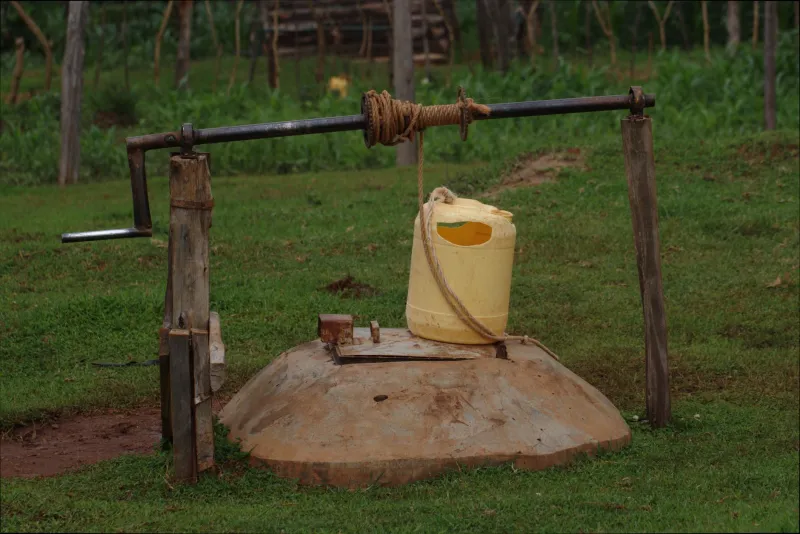
Solutions that actually hold up include hand-pump well conversions, gravity-fed rain catchment systems with mechanical filtration, and knowing the location of nearby natural water sources you can reach on foot. None of these are complicated. All of them require you to set them up before you need them.
Food Storage Is Only Half the Battle
Freezing and refrigerating food is so normal that most people don't count it as an electrical dependency — but it absolutely is. A chest freezer full of meat is a liability, not an asset, if you can't keep it cold for an extended outage.
The fix isn't just stockpiling shelf-stable food, though that matters. It's also building the skills and equipment to preserve food without power. Canning, smoking, salt-curing, and fermentation have kept people fed for centuries without a single kilowatt-hour. These aren't backup skills — they're primary ones.
Take a hard look at your kitchen too. Electric stoves and even many propane ranges with electronic ignition become useless during extended outages. A wood stove, a rocket stove, or even a well-made fire pit with proper cast iron cookware puts you back in control.
Communication: The Dependency Nobody Audits
Cell towers run on grid power with battery backup — backup that typically lasts 4 to 8 hours in a real outage. After that, your smartphone is a very expensive paperweight.
Most preppers acknowledge this and plan around it. But then their "solution" is a battery-powered weather radio or a ham radio setup that requires charging. That's better, but it's still downstream of electricity.
Hand-crank radios are a solid step forward. Understanding how to communicate without any electronic device — signal mirrors, flag systems, pre-arranged location check-ins with trusted neighbors — is the actual solution. It feels old-fashioned because it is. It also works when nothing else does.
The Audit Process: Walking Your Setup With Fresh Eyes
Here's a practical approach. Set aside an afternoon and walk through your entire survival setup as if the power just went out and isn't coming back for a month.
Ask these questions at every step:
- Does this require electricity to operate?
- Does this require electricity to recharge or refuel?
- If the answer to either is yes, what's the fully manual backup?
Go room by room. Go through your bug-out bag. Go through your vehicle. You will find dependencies you didn't know you had. That's the point.
Common surprises people find: electric can openers (yes, some people only own electric can openers), garage doors with no manual release practiced, alarm systems with short battery backups, medical devices that require power, and tools with battery-only operation and no manual equivalent.
Tools That Don't Need a Charge
This is where a genuine commitment to primitive and hand-powered tools pays off in ways that go beyond nostalgia. A quality hand saw doesn't need a battery. A well-balanced axe never needs charging. A manually operated drill press, a drawknife, a froe — these tools don't care whether the grid is up or down.
The same logic applies to lighting. Candles, oil lamps, and quality flashlights with spare batteries are fine for short outages. For a real, extended grid-down situation, you want lighting options that don't deplete — or at least that you can resupply locally and indefinitely.
Independence Isn't a Product, It's a Practice
The uncomfortable truth is that true grid independence can't be purchased in a single shopping cart. It's built over time through deliberate skill development, equipment choices made with clear eyes, and a willingness to acknowledge the weak points in your current plan.
The guy with the garage full of gear isn't wrong to own gear. He just needs to run the audit. Find the plugs. Pull them. Replace every electrical dependency with something that works when the lights don't come back on.
Because one day, they won't — at least not right away. And the people who've already made peace with that reality will be the ones keeping it together while everyone else is waiting for the power company to save them.