Deadfalls, Snares, and Pit Traps: The Zero-Ammo Hunting Strategy That Kept Our Ancestors Fed
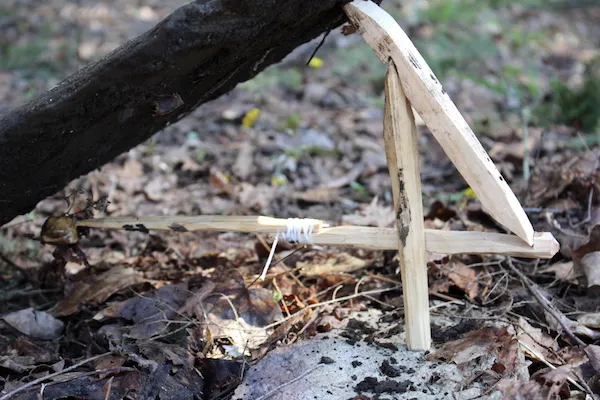
Photo: primitive deadfall trap wooden sticks wilderness survival forest floor, via i1.wp.com
There's a certain humbling reality that hits most preppers at some point: firearms are only as good as your last round. Ammo runs out. Guns jam. And in a long-term survival scenario, the noise of a shot can announce your position to anyone within a half-mile radius. Primitive trapping sidesteps every one of those problems.
This isn't about going full mountain man for the aesthetic. It's about building a genuine, replicable skill that works whether you're in the Appalachians, the Ozarks, or the high desert of the Southwest. The traps covered here use zero manufactured components—just wood, stone, cordage, and the knowledge to put them together correctly.
Why Primitive Trapping Belongs in Every Prepper's Skillset
Trapping is passive hunting. You set your traps, go about your other survival tasks—gathering water, building shelter, processing firewood—and let the trap do the work. A skilled trapper can run a line of ten or fifteen sets across a landscape and dramatically increase their caloric intake without burning the energy a failed stalk would cost.
Beyond efficiency, trapping is quiet. It leaves no smoke, no report, no obvious sign of your presence to anyone passing through. For preppers who think seriously about security in a grid-down scenario, that matters a great deal.
The Paiute Deadfall: Simple, Reliable, and Ruthlessly Effective
If you're only going to learn one primitive trap, make it the Paiute deadfall. Named for the Great Basin tribe that perfected it, this design uses a flat, heavy rock balanced on a notched trigger system made from three sticks and a short length of cordage.
Here's the basic setup:
- The toggle stick – A short, straight stick roughly the diameter of a pencil, sharpened slightly at one end.
- The upright post – A slightly longer stick that leans against the rock and holds it elevated.
- The bait stick – A thin, horizontal stick that sits perpendicular to the post and holds the bait on one end.
- The cordage loop – A small loop of natural cordage (twisted plant fiber or sinew works well) that connects the toggle to the upright, creating the hair-trigger tension.
Bait the end of the bait stick with whatever the local small game is feeding on—berries, seeds, or a smear of fat if you have it. When an animal disturbs the bait stick, the whole system collapses and the rock drops. For squirrels, rabbits, and rats, a flat stone weighing two to three pounds is sufficient. Size up for larger game.
Snares: The Workhorse of Backcountry Trapping
A fixed-loop snare is probably the most versatile tool in a primitive trapper's arsenal. Historically, these were made from twisted plant cordage, rawhide, or braided inner bark. In a true off-grid situation, you can twist your own cordage from dogbane, stinging nettle, or basswood bark—skills we've covered in previous articles on this site.
The key to a successful snare isn't just the loop—it's placement. You're looking for:
- Game trails with visible tracks, droppings, or worn vegetation
- Natural funnels like gaps in brush, fallen logs, or stream crossings
- Runs near burrows or den sites
For rabbits, suspend your loop about four fingers off the ground and size it to roughly the diameter of a baseball. For squirrels running along a log, lash the snare to the log itself so the animal has to pass through it. For larger animals like deer, a spring snare using a bent sapling as the power source adds the force needed to secure the animal before it can pull free.
Pit Traps: More Effort, Bigger Payoff
Pit traps are labor-intensive, no question. But in a long-term survival scenario where you have time and need to secure larger game, they're worth understanding. The basic design—a covered hole in the ground along a game trail—hasn't changed much in ten thousand years.
Dig your pit at least three feet deep for medium game, deeper for anything larger. The sides should slope slightly inward toward the bottom to prevent escape. Cover the opening with a lattice of thin sticks and leaves, then brush natural debris over the top to match the surroundings. Some traditional designs include sharpened stakes at the bottom, though that's a judgment call based on your situation and the game you're targeting.
Position matters enormously. A pit in the wrong location is just a hole in the ground. Look for pinch points where animals are channeled naturally—between a water source and a bedding area is a classic setup.
Know the Law Before You Set a Single Trap
This is non-negotiable. In the United States, trapping regulations vary significantly by state and are enforced seriously. Most states require a trapping license, restrict the types of traps that can be used, and have specific rules about trap placement near water, trails, or private property boundaries.
For preppers, the practical takeaway is this: learn and practice these skills now, within the law. That means checking your state's fish and wildlife regulations before you set anything in the field. Many states offer specific primitive skills or educational trapping permits. Use them. The time to figure out these logistics is not during an actual emergency.
In a genuine survival situation, the legal calculus changes—but that's a conversation for you and your conscience. What doesn't change is the need to actually know how to build and set these traps correctly, which only comes from legal, repeated practice.
Regional Considerations Across the US
The game you're trapping and the materials available to you will shift depending on where you are:
- Pacific Northwest: Dense timber country means abundant straight-grained wood for trap components. Snowshoe hare, grouse, and squirrel are primary targets in winter.
- Appalachians: Eastern cottontail, gray squirrel, and raccoon are common. Tulip poplar bark makes decent cordage material.
- Great Plains: Open terrain makes concealment trickier. Focus on prairie dog towns and creek bottoms where game concentrates.
- Desert Southwest: Jackrabbit and cottontail are abundant. Water sources are your best trap placement opportunity—everything comes to drink.
- Gulf Coast/Southeast: Nutria, squirrel, and rabbit are plentiful. Humidity will rot cordage faster, so check and replace your sets regularly.
Practice Is the Only Thing That Makes This Work
You can read every trapping guide ever written and still fumble a Paiute deadfall trigger in the field when your hands are cold and your focus is split. The only way to build genuine competence is repetition. Set traps in your backyard. Test trigger sensitivity with a stick before you use actual bait. Learn what your local squirrels and rabbits are eating by season.
Primitive trapping isn't a skill you can pick up the day you need it. It's the kind of knowledge that compounds quietly over years, and when the time comes to rely on it, you'll be glad you started building it now.